
1.Following distance, scanning and blind spots
- Stay at least two seconds behind the vehicle in front. That gap lets you see past it and leaves room to stop if it stops suddenly.
- To measure it, choose a fixed object up ahead, a sign or a telephone pole, say. The moment the back of the vehicle in front passes it, start counting "one thousand and one, one thousand and two". Reaching the marker before the count is done means you are too close.
- The two-second rule is a minimum and applies only to ideal driving conditions. Leave more room than that in bad weather, behind a motorcycle or a large truck, or when you have a heavy load on board.
- Following too closely adds 4 demerit points to your record if you are convicted.
- Glance at your mirrors roughly every five seconds, and cover the blind spots by turning your head and looking over your shoulder.
- Side mirrors cover only a narrow angle, so turning your head for a shoulder check is the only way to be sure the blind spots are empty.
- Adjust your speed so that other drivers do not sit in your blind spot, and stay out of theirs, above all around large commercial vehicles, whose blind spots to the sides and rear are typically big.
- Looking well down the road means fewer surprises and more time to deal with whatever appears.
Official source: MTO Driver’s Handbook – Driving along ↗ · MTO Driver’s Handbook – Getting ready drive ↗ · MTO Driver’s Handbook – Safe and responsible driving ↗ · Ontario.ca – Understanding demerit points ↗
2.Night driving and headlights
- Headlights have to be on from one-half hour before the sun sets until one-half hour after it rises.
- They are also required whenever the light is poor for some other reason, fog, snow or rain for instance, and you cannot clearly make out people or vehicles within 150 metres.
- Drop from high beams to low beams once an oncoming vehicle is within 150 metres, and stay on low beams whenever you are closer than 60 metres behind another vehicle, unless you are in the middle of passing it. That holds on every road, divided highways included.
- Failing to lower headlamp beams adds 2 demerit points to your record if you are convicted.
- Overdriving your headlights means travelling so fast that you could not stop within the distance the headlights light up. At night, slow down, above all on unlit roads and in weather that cuts visibility.
- Fog calls for low beams: high beams bounce back off the water droplets and make it harder to see.
- When bright headlights come toward you at night, direct your eyes up, past the lights and a little to the right of them.
- Should your headlights fail, the first thing to check is the switch. If they stay dark, put your hazard lights on, get the vehicle safely off the road and stopped, then call for help; driving at night with no lights is both dangerous and against the law.
Official source: MTO Driver’s Handbook – Getting ready drive ↗ · MTO Driver’s Handbook – Driving night and bad weather ↗ · MTO Driver’s Handbook – Dealing emergencies ↗ · Ontario.ca – Understanding demerit points ↗
3.Winter and bad-weather driving
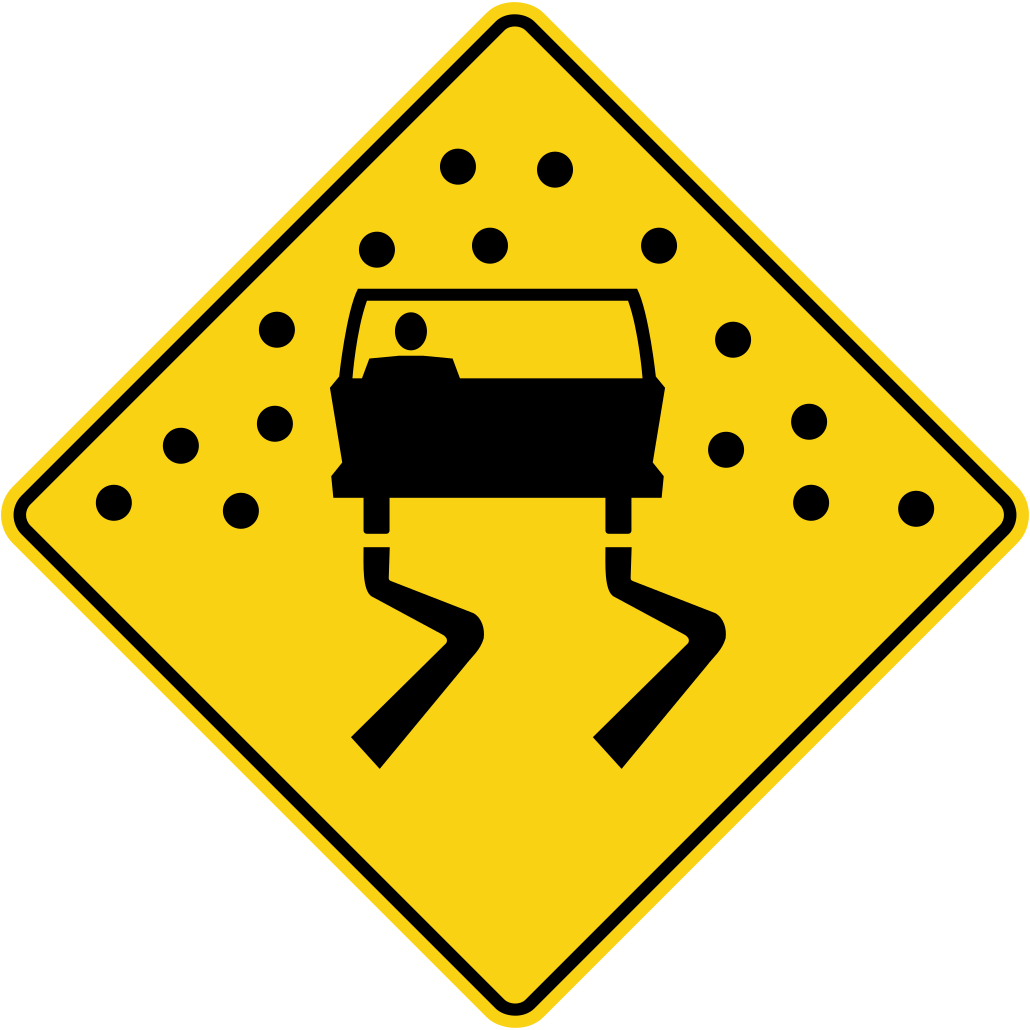
- Once the temperature falls below freezing, wet pavement turns to ice. The first places to freeze are shaded stretches, bridges and overpasses.
- Be wary when the asphalt ahead looks black and glossy: a thin, nearly invisible coating of ice, black ice, may be the reason. In winter, asphalt normally looks gray-white. Suspect black ice? Ease off and take extra care.
- Slow down on rutted, snowy roads and avoid sudden steering, braking or accelerating that could cause a skid. Leave cruise control off in snow and other bad weather.
- In blowing snow or a whiteout, drive on low beams, leave more room to the vehicle ahead, and never stop on the travelled part of the road, where a stopped vehicle can set off a chain-reaction collision.
- For the best grip in winter, the recommendation is four winter or all-weather tires, all with the same tread pattern.
- Before you set off, clear away any ice, snow or dirt that could block your lights, hamper your steering or your view, or fly off and endanger other drivers once you are moving.
- Stuck or stranded in severe weather, stay in the vehicle: it is warmer and safer than setting out, and help will find you there. Crack a window for ventilation, run the engine only sparingly and keep the emergency flashers on.
- A winter survival kit belongs in the car: warm clothing, non-perishable energy foods, a flashlight, a shovel and a blanket.
- Snow-removal vehicles have flashing blue lights that can be seen from 150 metres. On freeways several snow plows may be staggered across the road — do not try to pass between them.
Signs in this section
Official source: MTO Driver’s Handbook – Driving night and bad weather ↗ · MTO Driver’s Handbook – Maintaining your vehicle ↗
4.Fatigue and distraction
- A tired driver can be as impaired as a drunk one: reactions are slower and attention drifts.
- Warning signs that drowsiness is serious include difficulty keeping your eyes open, frequent yawning, not remembering the last few kilometres you have travelled, and your vehicle drifting into the next lane.
- Any of these signs means you could fall asleep at the wheel. Get off the road, park somewhere safe and secure, lock the doors, close the windows and sleep.
- No stimulant replaces sleep. Caffeine may sharpen you briefly, but the effect fades fast; a louder radio or an open window helps no longer than that.
- Texting or dialling on a phone or any other hand-held wireless device is illegal whenever you are behind the wheel, and that includes sitting in traffic or waiting at a red light. The only time you may touch a device is to reach emergency services: ambulance, police or fire.
- For A to G licence holders, a first distracted-driving conviction means a fine of $615 if settled out of court (up to $1,000 if you receive a summons or fight the ticket and lose), three demerit points and a 3-day suspension.
- Novice drivers holding a G1, G2, M1 or M2 licence face the same fines but receive no demerit points. Instead they face longer suspensions: 30 days for a first conviction.
- Sort out your route and your playlist before you set off, and when the phone really has to be used, find a safe place to pull over and park first.
Official source: MTO Driver’s Handbook – Dealing particular situations ↗ · Ontario.ca – Distracted driving ↗
5.Skids, hydroplaning and emergency braking
- A skid starts when one tire or more loses its grip on the road, most often where the surface is wet, icy or covered with snow, gravel or other loose material. The usual cause is speed that is too high for the conditions.
- The moment a skid begins, come off the accelerator or the brake; if the surface is very slippery and you are able to, shift into neutral as well.
- Keep steering toward where you want to go, without overdoing it. With control regained, braking is fine, but keep it gentle and smooth.
- With too much water on the road, or too much speed, the tires can lift and skim across the surface the way water skis do. That is hydroplaning, and it makes the vehicle very hard to control. Good tires with deep tread and a lower speed on wet roads are the defence against it.
- With ABS, controlled braking on a slippery surface is automatic: press hard on the pedal and let the system manage wheel lock-up.
- If you have never braked hard with anti-lock brakes, the pulsing you feel through the pedal can come as a surprise. Know what to expect so you are not tempted to release the pedal during emergency braking.
- ABS keeps the wheels from locking; it does not make the vehicle stop in a shorter distance, so do not count on that.
- Threshold braking is the technique for a vehicle without ABS: press the brake as hard as you can, and the instant a wheel starts to lock, ease the pedal slightly and press again. Do not pump the brakes.
- Keep off flooded roads, because water can stop your brakes from working. If there is no way around a flooded stretch, test the brakes once you are through and it is safe: from 50 km/h, stop quickly and firmly.
Official source: MTO Driver’s Handbook – Driving night and bad weather ↗
6.When something goes wrong
- When the brakes fail, pump the pedal; that can bring back hydraulic pressure for a moment. If it does not, hold the release button and apply the parking brake gently but firmly.
- After a brake failure, once you have stopped, stay stopped and call for help rather than driving on.
- A stuck gas pedal: first try to free it by slipping your foot underneath and lifting. Never reach down with a hand while the vehicle is moving.
- If that fails, put on the hazard lights, shift into neutral and pull up as soon as it is safe, ideally off the road. Switch the ignition off and stay put rather than driving on.
- When a tire blows, lift your foot off the gas so the vehicle slows, hold the steering firmly toward where you want to go, and bring the vehicle to a halt off the road.
- If your wheels drop off the edge of the pavement, do not panic. Hold the wheel firmly, ease off the gas so you slow down, and stay away from hard braking. Only once the vehicle is steady should you steer back onto the pavement.
- If you have trouble on a freeway, begin to pull over at the first sign of trouble — do not wait for your vehicle to stall. Mirrors first, then hazard lights on, foot off the gas, and over to the nearest shoulder. Never stop in the driving lanes.
- Wait for help inside the vehicle with the doors locked. Should someone stop, ask them to call the police or an automobile club on your behalf. Leave the hood down.
Official source: MTO Driver’s Handbook – Dealing emergencies ↗
7.If you are in a collision
- A driver involved in a collision has to remain at the scene, or go straight back to it, and give whatever help is possible.
- Failing to remain at the scene of a collision adds 7 demerit points, as does failing to stop when signalled or asked by a police officer.
- The law requires a police report for any collision that causes injuries, or vehicle or property damage above $5,000.
- When the damage comes to less than $5,000, the law still requires you to swap details with every driver whose vehicle was damaged, but you do not have to report the collision to the police.
- Failing to report a collision to a police officer adds 3 demerit points to your record if you are convicted.
- The police will need your name and address, the registered owner’s name and address, the plate and permit number of the vehicle and your liability insurance card; in return, collect the name, address and phone number of every witness.
- If anyone is hurt, switch off every engine and switch on the emergency flashers. Put out flares or other warning signals, or get someone to flag down approaching drivers, and keep everyone from smoking or striking a match near the vehicles in case fuel is leaking.
- Unless fire or an explosion threatens, do not move anyone who is injured; wait with them until trained medical help arrives.
- When nobody is hurt and the vehicles can still be driven, get them as far off the road as you can: "Steer it, Clear it". If they cannot be moved, place flares or other warning signals far enough back that approaching traffic has time to slow down or stop.
Official source: MTO Driver’s Handbook – Dealing emergencies ↗ · Ontario.ca – Understanding demerit points ↗