
1.School buses
- Flashing amber lights on top of the bus mean it is about to stop and let passengers on or off: ease off and get ready to stop, whether the bus is ahead of you or coming toward you.
- Where the road has no median, that is, no raised barrier separating the directions, traffic going both ways has to stop once the bus has stopped with its overhead red lights flashing or its stop arm out.
- Where there is a median, only the traffic travelling the same way as the bus has to stop; drivers coming the other way may carry on.
- Behind the bus, stop no closer than 20 metres. Facing it, stop far enough back that children can get on and off and cross the road safely.
- Do not move off again until the bus itself is moving, its overhead red lights have gone out and its stop arm has folded back in.
- The school bus law applies on every road, whatever the number of lanes or the speed limit, and at every hour, not only when school is in.
- Pass a school bus that is stopped with its red lights flashing or its stop arm out and a first offence costs between $400 and $2,000 in fines plus 6 demerit points.
- Each following offence brings fines ranging from $1,000 to $4,000, 6 demerit points and possible jail time of up to 6 months.
Official source: MTO Driver’s Handbook – School bus safety ↗ · MTO Driver’s Handbook – Stopping ↗
2.Streetcars and emergency vehicles
- Streetcars are passed on the right; the exception is a one-way road.
- Where a streetcar is loading or unloading, keep at least two metres back from its rear doors.
- The rule is different where a safety island or zone has been built for streetcar passengers: there you may pass at a reasonable speed, staying alert for pedestrians who step out suddenly.
- Whenever an emergency vehicle comes toward you from any direction with red or red and blue lights flashing, or with its siren or bell going, stop at once, getting as close to the right-hand curb or road edge as you reasonably can.
- On a one-way road or a divided highway with more than two lanes, pull to whichever curb or edge is nearer. Stay off the shoulder, which emergency vehicles may be using to get through.
- Caught in an intersection about to turn when an emergency vehicle comes up, give up the turn: drive straight out of the intersection as soon as it is safe, then move right and stop.
- Following a fire vehicle that is answering an alarm closer than 150 metres is against the law.
- Coming up on a stopped emergency vehicle whose red, or red and blue, lights are flashing, or a stopped tow truck whose amber lights are flashing, on your side of the road, slow down and go past carefully.
- If your side of the road has two or more lanes, you also have to move over into a lane farther from the emergency vehicle or tow truck, provided it is safe to do so.
- For a first offence the fine is between $400 and $2,000, a conviction adds 3 demerit points, and your licence can be suspended for as long as 2 years.
Official source: MTO Driver’s Handbook – Changing positions ↗ · MTO Driver’s Handbook – Dealing particular situations ↗ · MTO Driver’s Handbook – Driving near emergency vehicles ↗
3.Pedestrians
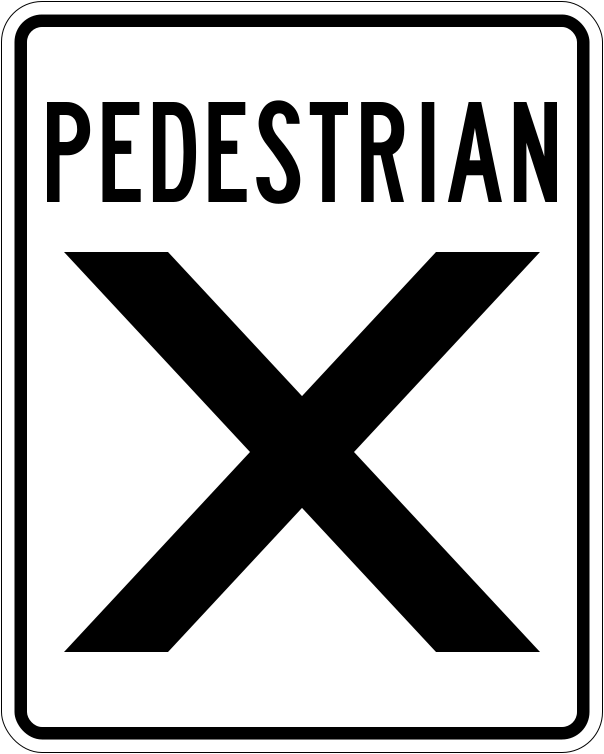
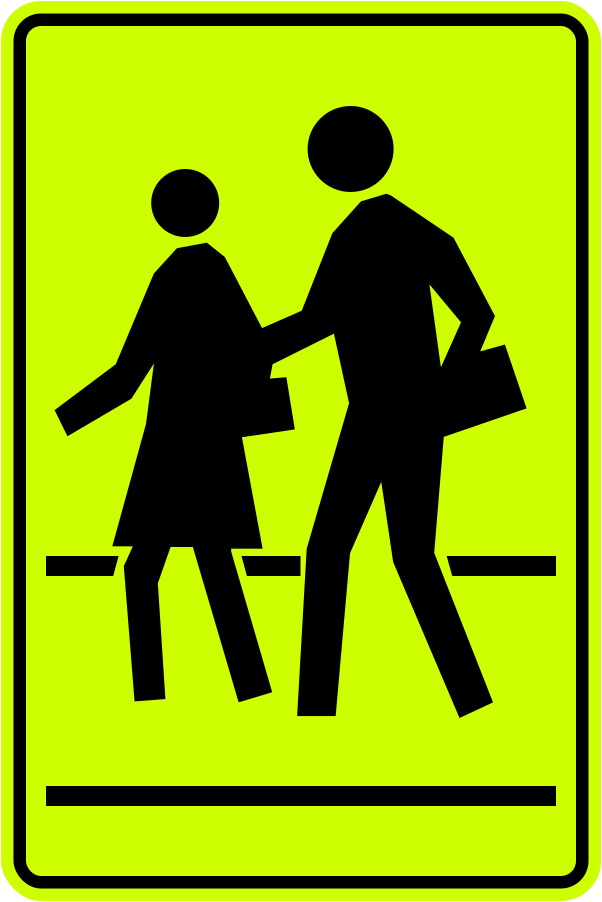
- At a pedestrian crossover, a school crossing or anywhere a crossing guard is on duty, drivers and cyclists stop and leave the whole width of the road to the people crossing.
- Nobody moves until the pedestrians and the crossing guard have finished crossing and are safely on the sidewalk.
- No passing is allowed within 30 metres of a pedestrian crossover.
- Never overtake a vehicle that has stopped at a crosswalk: the fact that it has stopped may well mean someone is crossing. Marked or not, a crosswalk exists at almost every intersection.
- Failing to stop at a pedestrian crossover adds 4 demerit points to your record.
- A school crossing guard holding up a red and white stop sign means you stop short of the crossing and stay stopped until the whole roadway is clear of people, the guard included. Ignoring that stop can bring a substantial fine and three demerit points.
- A white cane or a guide dog tells you the person is blind or has a visual disability. Older pedestrians and pedestrians with disabilities may take longer to cross, so give them extra time and patience.
- Turning left, wait for any pedestrian who is in your path or heading into it; turning right, the same applies. Coming out of a private road or driveway onto a road, give way to pedestrians on the sidewalk.
Signs in this section
Official source: MTO Driver’s Handbook – Sharing road other road users ↗ · MTO Driver’s Handbook – Stopping ↗ · MTO Driver’s Handbook – Driving through intersections ↗ · MTO Driver’s Handbook – Keeping your drivers licence ↗
4.Cyclists
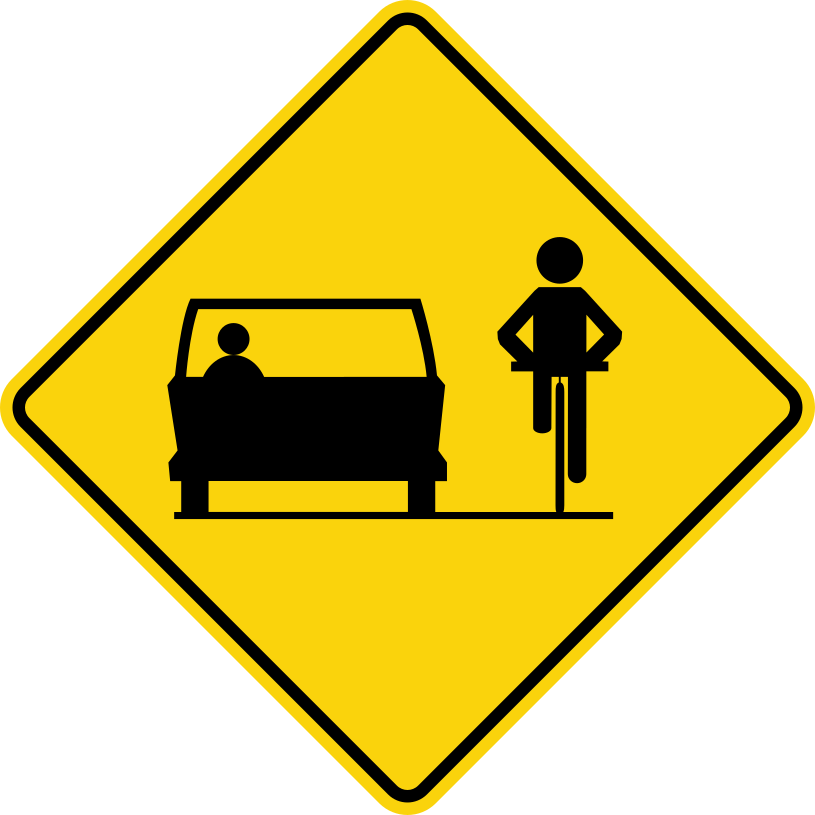
- When passing a cyclist, you must maintain a minimum distance of one metre, where practical, between your vehicle and the cyclist. Whenever possible, change lanes to pass.
- Leaving less than that can mean a fine, plus two demerit points added to your record.
- A cyclist moving slower than the traffic around them is expected to keep roughly one metre out from the curb or from parked cars, but may use any part of the lane when safety calls for it.
- Leave extra room behind a cyclist: with no brake lights, a bicycle gives you no warning that it is slowing or stopping.
- Before a right turn, signal, then check the mirrors and the right-hand blind spot so you do not cut across a cyclist.
- Before a left turn, stop and let any oncoming bicycle go by first.
- Parked at the roadside, look back over your shoulder and in the mirrors for a cyclist coming up before any door opens.
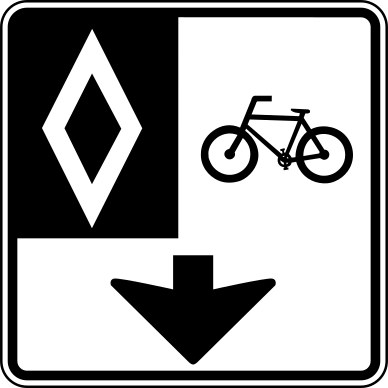
- Bike lanes are reserved for cyclists and are typically marked by a solid white line. Sometimes you need to enter or cross one to turn right at a corner or driveway — enter it only after ensuring you can do so safely, and then make the turn.
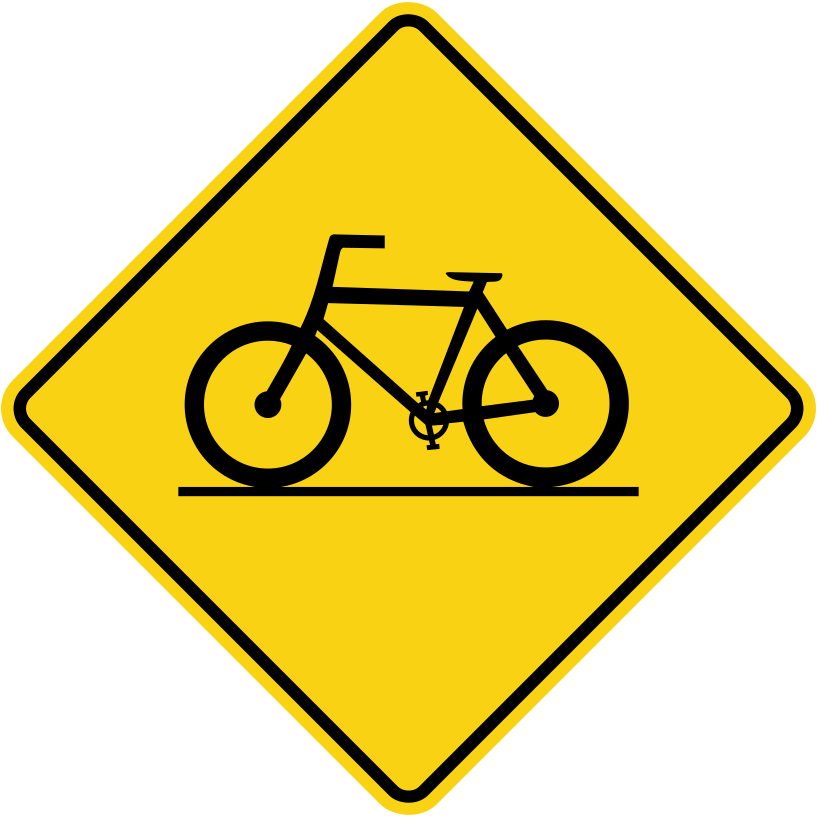
- The share the road sign tells drivers to leave cyclists and other vehicles a safe amount of room, and to take extra care on the stretch of road ahead.
Signs in this section
Official source: MTO Driver’s Handbook – Sharing road other road users ↗ · MTO Driver’s Handbook – Signs ↗
5.Motorcycles and large trucks
- A motorcycle is entitled to the whole lane, and you should drive around it exactly as you would around any other vehicle.
- Mopeds and bicycles, like motorcycles, are easy to miss because they are small, and a rough road surface or bad weather can force their riders to swerve without warning.
- Many motorcycle turn signals do not cancel themselves, so an oncoming motorcycle with its signal on may not be turning at all. Do not turn left in front of one until you can see the rider really is turning.
- A motorcycle, bicycle or moped will often move to one side of its lane, either to steer clear of a bad patch of road or to be more visible. That is not an invitation to squeeze past within the same lane; change lanes to pass.
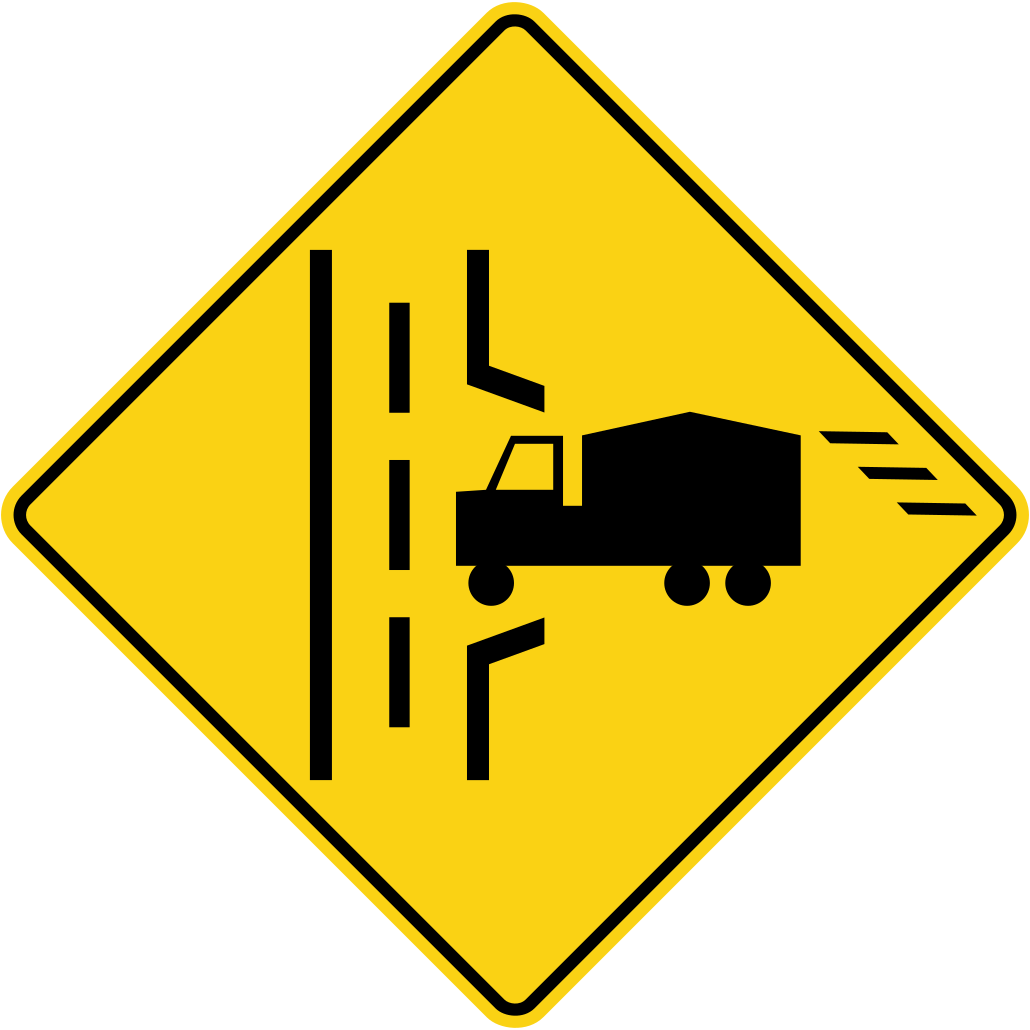
- Big trucks have big blind spots, on both sides. Avoid tailgating one: the driver cannot see you if you are directly behind, and if the vehicle stops suddenly you have no place to go.
- A simple test: unless the truck driver’s face is visible to you in the side-view mirror, you are invisible to the driver.
- A large commercial vehicle needs far more road to stop than a car does, so after passing one, leave plenty of space before moving back in, and give it more room throughout the pass.
- A large vehicle turning right may have to swing out to the left first so that it clears the right curb. Hang well back until the truck is fully out of the lane, or you could find yourself pinned between the trailer and the curb.
- Stopped behind a large vehicle, keep a generous gap: it may roll backwards a little as the driver comes off the brakes to pull away.
Signs in this section
Official source: MTO Driver’s Handbook – Sharing road other road users ↗ · MTO Driver’s Handbook – Changing positions ↗
6.Railway crossings
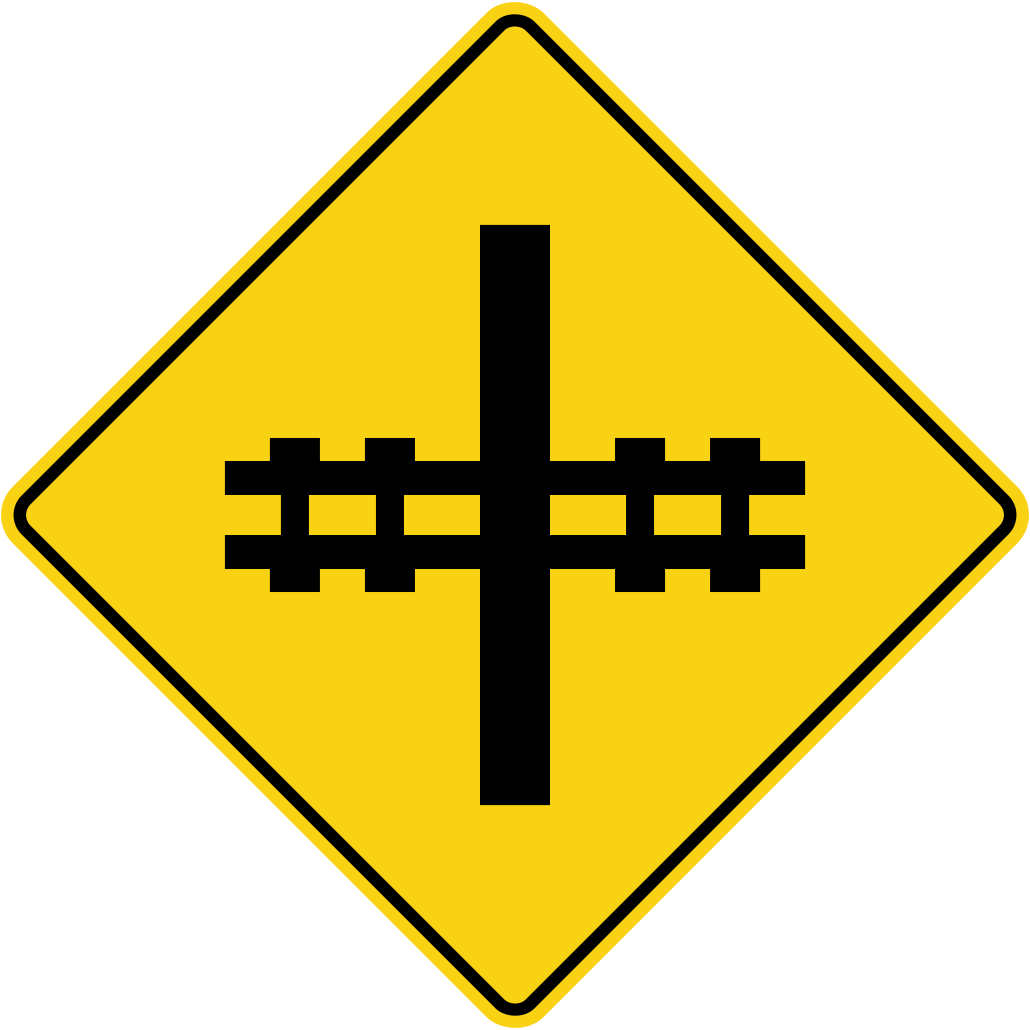
- Every railway crossing on an Ontario public road carries a large red and white X sign. Ahead of many crossings there are also yellow advance warning signs and a large X painted on the pavement.
- Before the tracks, slow down, listen, and look in both directions until you are sure the way is clear. Trying to beat a train to a crossing is never worth it.
- When a train is approaching, stop no less than five metres from the nearest rail or gate, and do not move until you are certain the train, and any train behind it, has gone by.
- Where there are signal lights, wait for them to stop flashing; where there is a gate or barrier, wait for it to lift fully before crossing.
- A railway gate or barrier that is down, coming down or going up must not be driven around, under or through. Doing so adds 3 demerit points.
- Never let yourself stop on the tracks; when traffic is heavy, do not start across until there is clearly room on the far side for the whole vehicle. If you do get stuck on a crossing, get everyone out and well clear of the vehicle at once, then call the authorities.
- A school bus stops at every railway crossing, protected by gates or signals or not, and it does not use its upper alternating red lights for these stops. Most other buses and public vehicles have to stop only where the crossing has no gates, no signal lights and no stop sign.
- At a level railway crossing, parking is prohibited within 15 metres of the nearest rail.
Signs in this section

Official source: MTO Driver’s Handbook – Stopping ↗ · MTO Driver’s Handbook – Parking along roadways ↗ · MTO Driver’s Handbook – Keeping your drivers licence ↗
7.Slow-moving vehicles
- An orange triangle with a red border is the slow-moving vehicle sign, a warning that the vehicle carrying it travels at 40 km/h or less.
- Farm tractors, farm implements and machinery, and any vehicle that cannot keep up a speed above 40 km/h, have to carry the slow-moving vehicle sign when they are on the road.
- Seeing that sign, ease off and stay alert; keep a good distance behind and wait for a safe opportunity to pass.
- Farm machinery is often oversized, wide or long, so the operator may not be able to see you approaching from behind, and farmers frequently turn straight into a field rather than onto a road or lane.
- During the busiest planting and harvesting weeks, farm vehicles are often on the road after dark.
- Horse-drawn vehicles must also display an orange and red slow-moving sign. Pass one as wide as the road allows, because a vehicle going by too close can spook the horse.
- Unnecessary slow driving is itself an offence and adds 2 demerit points to your record.
Signs in this section
Official source: MTO Driver’s Handbook – Signs ↗ · MTO Driver’s Handbook – Sharing road other road users ↗ · Ontario.ca – Understanding demerit points ↗