
1.Speed limits
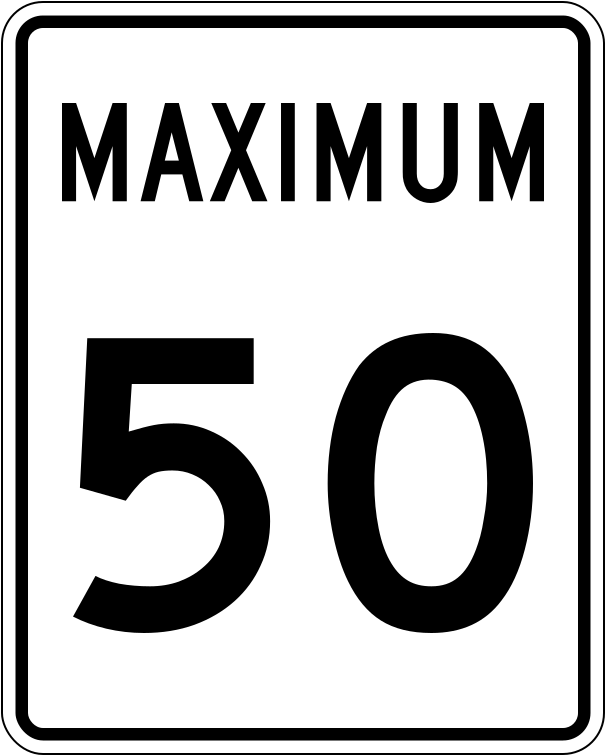
- Unless a sign says otherwise, the limit in a city, town or village is 50 km/h, and outside them it is 80 km/h.
- The posted maximum is a ceiling, not a target: pick a speed from which you can always stop safely, which means staying under the maximum in bad weather, heavy traffic or a construction zone.
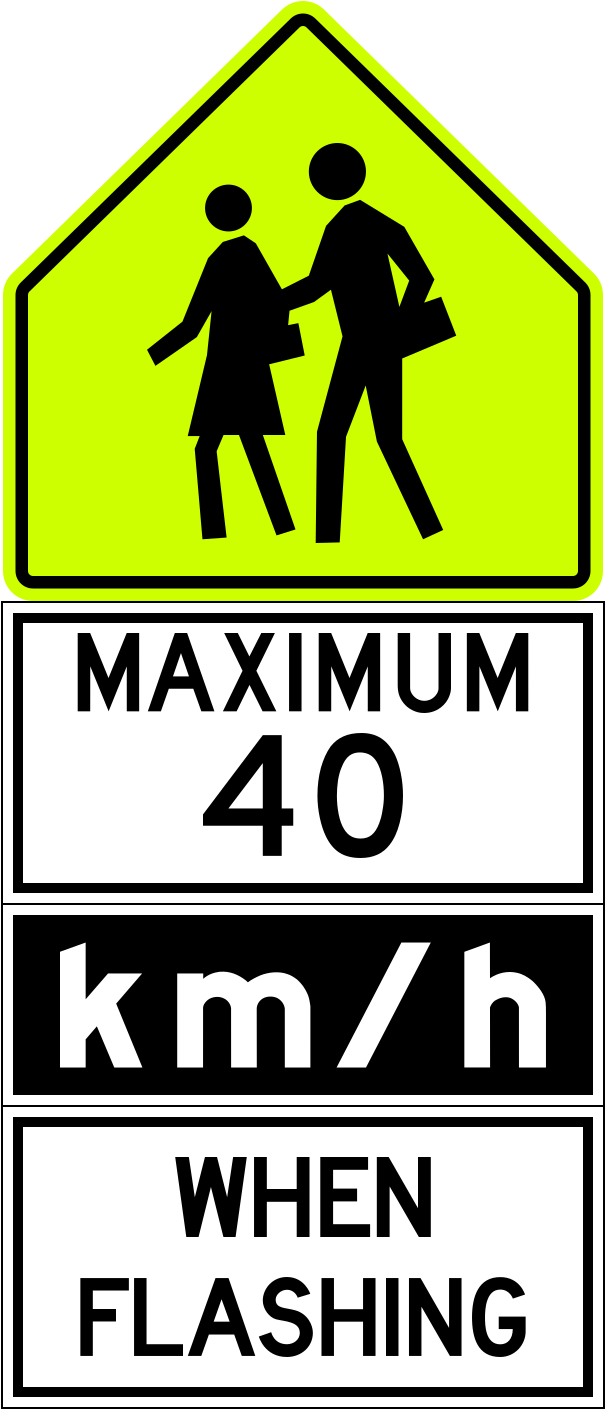
- Expect reduced limits in school zones and construction zones. A school zone’s lower limit applies during school hours: when the yellow lights are flashing, drive at the speed shown.
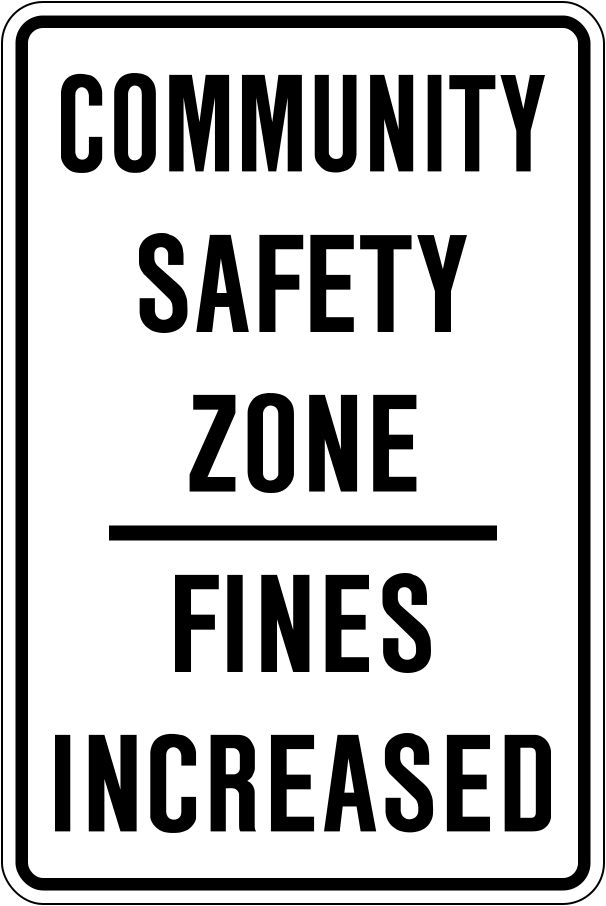
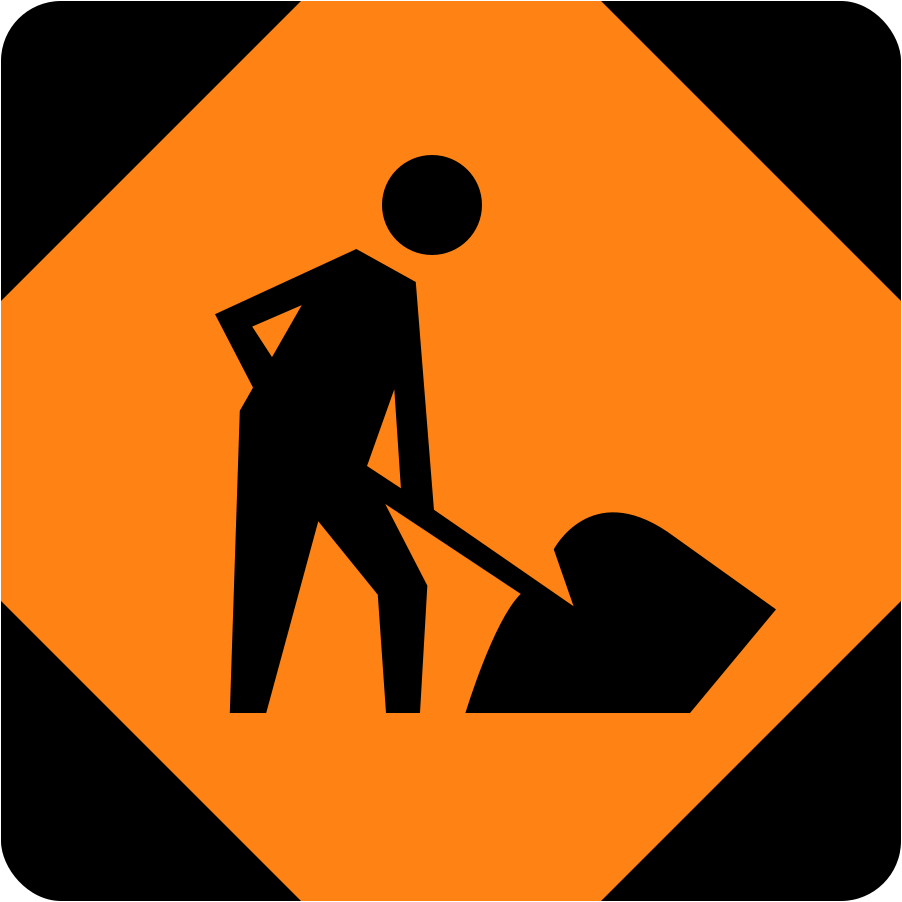
- Fines for speeding in a construction zone are doubled when workers are present. In a community safety zone, the fines for traffic offences go up as well.
- Some sections of Ontario freeways have limits of 110 km/h, but drivers caught driving 150 km/h or more anywhere in the province are subject to stunt driving charges.
- Unnecessary slow driving adds 2 demerit points, and you must not block the normal and reasonable movement of traffic.
Signs in this section
Official source: MTO Driver’s Handbook – Driving along ↗ · MTO Driver’s Handbook – Signs ↗ · MTO Driver’s Handbook – Dealing particular situations ↗ · MTO Driver’s Handbook – Speeding and aggressive driving ↗ · Ontario.ca – Understanding demerit points ↗
2.The risks of speed, and stunt driving
- The faster you go, the farther you need to brake and stop, and the narrower your field of vision becomes, so changing road conditions are harder to react to in time.
- Crash at 50 km/h or more over a 100 km/h limit and the chance of being killed or seriously hurt is 11 times what it is in a crash at or below the posted limit.
- A speeding conviction can bring demerit points on top of the fine: 3 points for 16 to 29 km/h over the limit, 4 points for 30 to 49 km/h over, and 6 points for 50 km/h or more over.
- Six demerit points also apply when you are 40 km/h or more over the limit on a road where the limit is under 80 km/h.
- Stunt driving includes driving 50 km/h or more over the speed limit, or 40 km/h or more over on a road with a limit less than 80 km/h. On the spot, it costs you your licence for 30 days and the vehicle for 14 days, impounded at the roadside whether or not it is yours, and it adds six demerit points.
- Novice drivers who are convicted of speeding 30 km/h or more over the limit, following too closely, careless driving, leaving the scene of a collision or stunt driving lose their licence for 30 days at a minimum, and may have it cancelled.
Official source: MTO Driver’s Handbook – Speeding and aggressive driving ↗ · Ontario.ca – Understanding demerit points ↗
3.Passing other vehicles
- Passing is normally done on the left. Passing on the right is allowed on multi-lane and one-way roads, and when you overtake a streetcar or a vehicle that is turning left.
- The right shoulder may be used for passing only to get around a vehicle turning left, and only where the shoulder is paved. The left shoulder is never for passing, paved or not.
- A solid line on your left says passing is unsafe; a broken line says you may pass when the way is clear. Never try to pass as you near the top of a hill, or on a curve that hides oncoming traffic from view.
- Do not pass within 30 metres of a pedestrian crossover, and do not cross the centreline to pass within 30 metres of a bridge, viaduct or tunnel.
- Once you are past, signal your return to the original lane, and change lanes only once your inside mirror shows the whole front of the vehicle you have passed. Moving in earlier than that cuts the other vehicle off, so wait for that view.
- If faster traffic comes up behind you, keep to the right and let it by safely. Speeding up while someone is passing you is both illegal and dangerous.
- Overtake only when you are certain you can do it without endangering yourself or anyone else, and never pass a moving snow plow, whatever the conditions. If in doubt, do not pass.
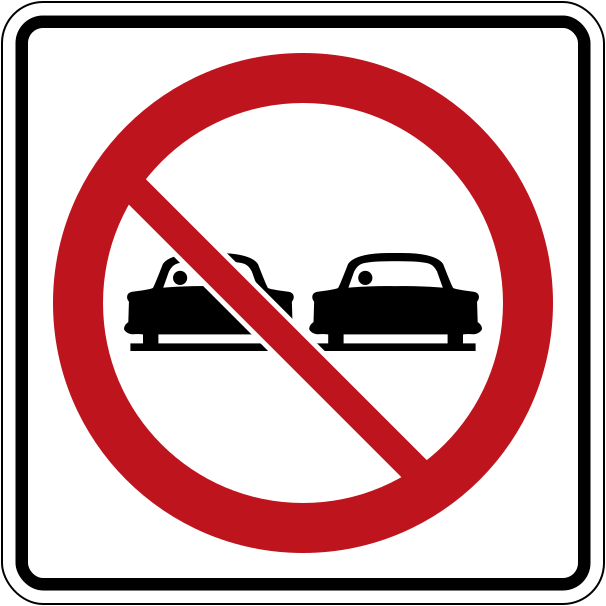
- Improper passing adds 3 demerit points, and a "do not pass" sign means you may not pass on that road.
Signs in this section
Official source: MTO Driver’s Handbook – Changing positions ↗ · MTO Driver’s Handbook – Pavement markings ↗ · Ontario.ca – Understanding demerit points ↗ · MTO Driver’s Handbook – Signs ↗
4.Lane changes, HOV lanes and special lanes
- To change lanes: check your mirrors for a space in traffic, check your blind spot by looking over your shoulder, signal, check again that the way is clear, then steer gradually into the new lane without slowing down.
- Avoid unnecessary lane changes or weaving from lane to lane, and do not change lanes in or near an intersection. A sudden lane change that cuts in front of another vehicle, bicycles included, is never acceptable.
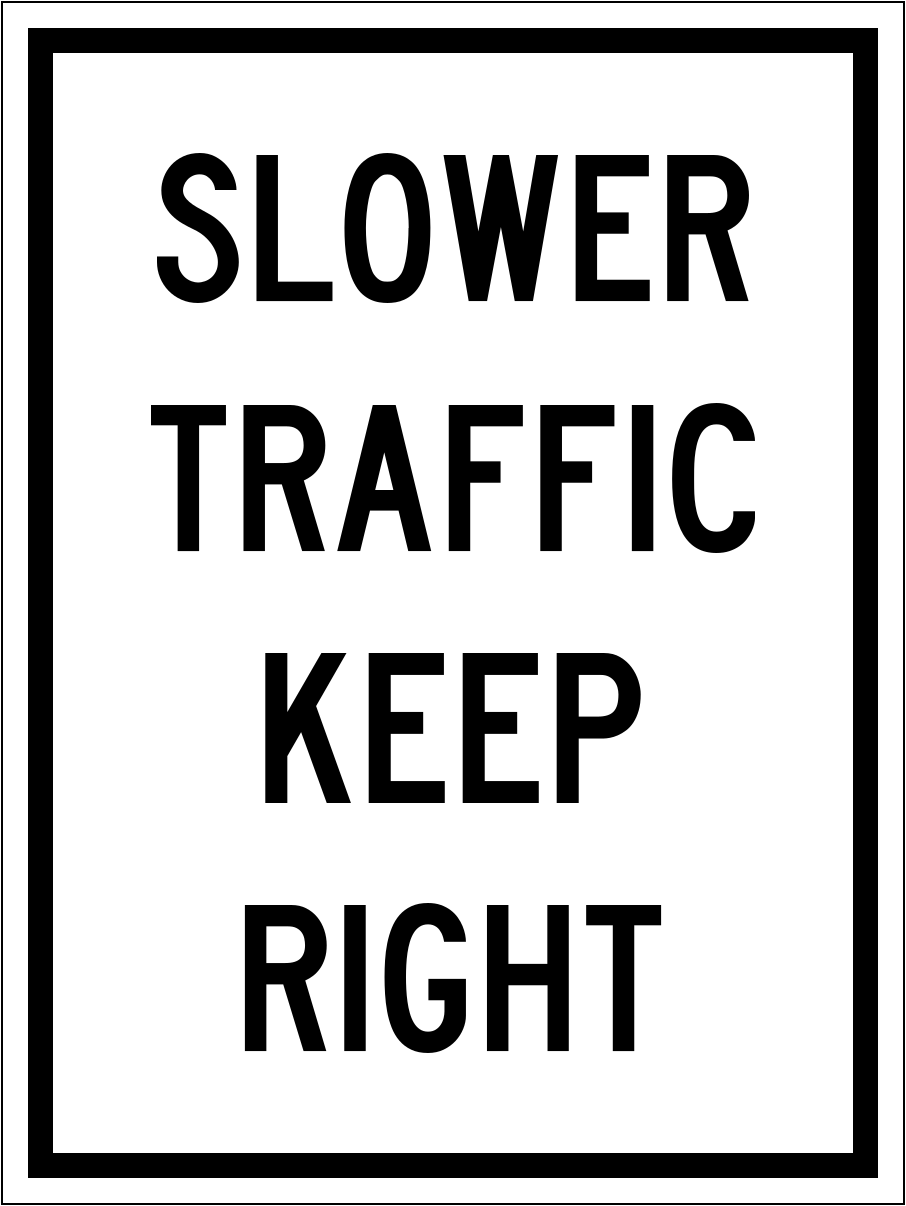
- Keep right, in the right-hand lane where the road has more than one, except when you are about to turn left or pass. On multi-lane roads, slower traffic belongs on the right.
- On provincial highways the HOV lane is for vehicles with two or more people in them, and also for buses, licensed taxis, green-plate vehicles, airport limousines, motorcycles, holders of a High-Occupancy Toll permit (where permitted) and emergency vehicles. The lanes run 24 hours a day, seven days a week, and large trucks are kept out of them.
- A striped buffer zone divides the HOV lane from the general traffic lanes; driving across those stripes is both unsafe and illegal. Improper use of an HOV lane adds 3 demerit points, and you can be stopped and ticketed by a police officer.
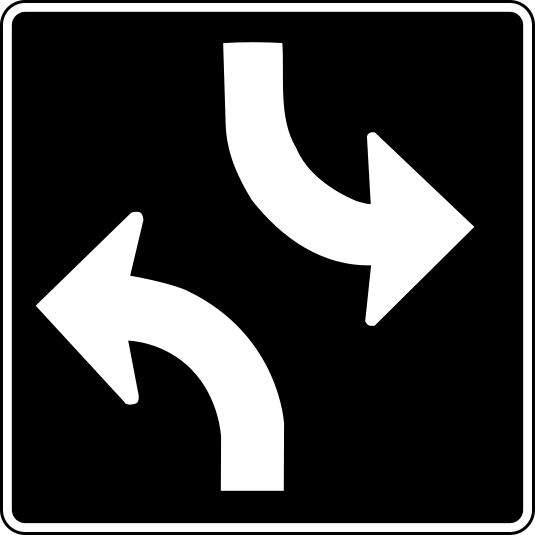
- A two-way left-turn lane sign, above the road or on the ground, means that lane is only for two-way left turns.
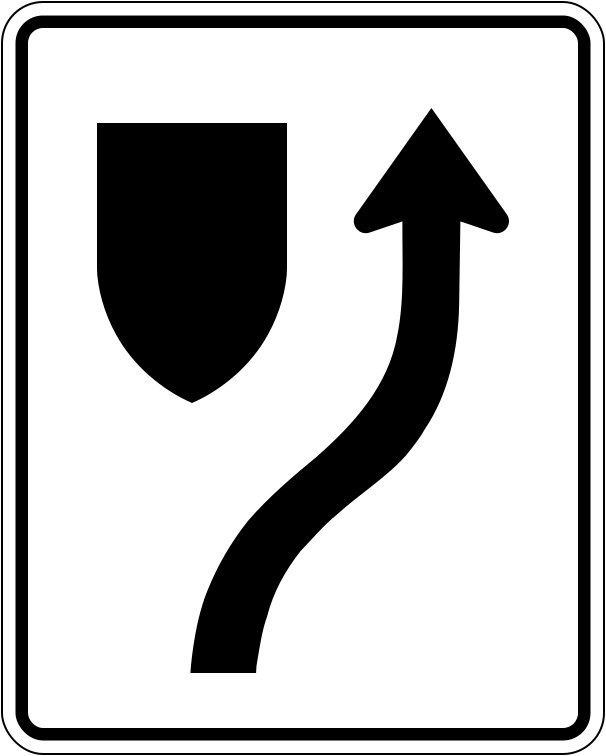
- A "keep right" sign means keep to the right of the traffic island. Driving the wrong way on a divided road adds 3 demerit points.
- Many high-speed roads with three or more lanes each way keep trucks out of the leftmost lane, which makes the lane beside it the one trucks use to pass. When you are in that lane and a truck comes up behind you wanting to pass, get over to the right as soon as it is safe.
Signs in this section
Official source: MTO Driver’s Handbook – Changing positions ↗ · MTO Driver’s Handbook – Driving along ↗ · MTO Driver’s Handbook – Signs ↗ · MTO Driver’s Handbook – Freeway driving ↗ · Ontario.ca – Understanding demerit points ↗
5.Entering and leaving a freeway
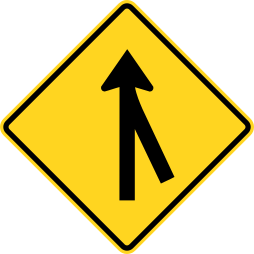
- A freeway entrance usually has two parts: an entrance ramp and an acceleration lane. On the ramp, look ahead and check your mirrors and blind spots; in the acceleration lane, signal and increase your speed to the speed of traffic so you merge smoothly.
- When leaving a freeway, signal that you want to move into the deceleration lane, but do not slow down. Once in it, bring your speed down gradually to the figure posted for the ramp, and check the speedometer, because after a stretch at freeway speed your sense of how fast you are going is unreliable. The ramp may end at a stop sign or a light, so be ready to stop.
- Miss your exit and the only answer is to carry on to the next one; stopping or reversing on the freeway is never an option. Backing on a highway adds 2 demerit points.
- Traffic on a freeway should keep to the right, using the left lanes for passing. Use the far left lane to pass traffic moving slower than the speed limit, but do not stay there — get into the habit of driving in the right lane.
- A G1 driver may use a freeway only with a licensed driving instructor in the car. Otherwise, G1 drivers must stay off any 400-series highway whose posted limit is above 80 km/h, and off certain named high-speed roads such as the Queen Elizabeth Way, the Don Valley Parkway and the Gardiner Expressway.
- Leave at least two seconds between you and the vehicle ahead. Adjust your speed so other drivers are not sitting in your blind spot, and stay out of theirs; around large commercial vehicles this matters most.
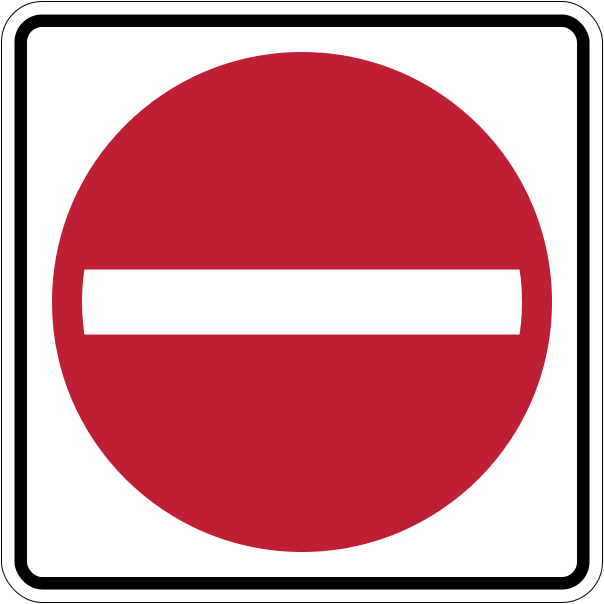
- A "do not enter" sign means do not enter that road. Driving the wrong way on a divided road adds 3 demerit points.
Signs in this section
Official source: MTO Driver’s Handbook – Freeway driving ↗ · Ontario.ca – Understanding demerit points ↗ · MTO Driver’s Handbook – Getting your drivers licence ↗ · MTO Driver’s Handbook – Driving along ↗ · MTO Driver’s Handbook – Signs ↗