
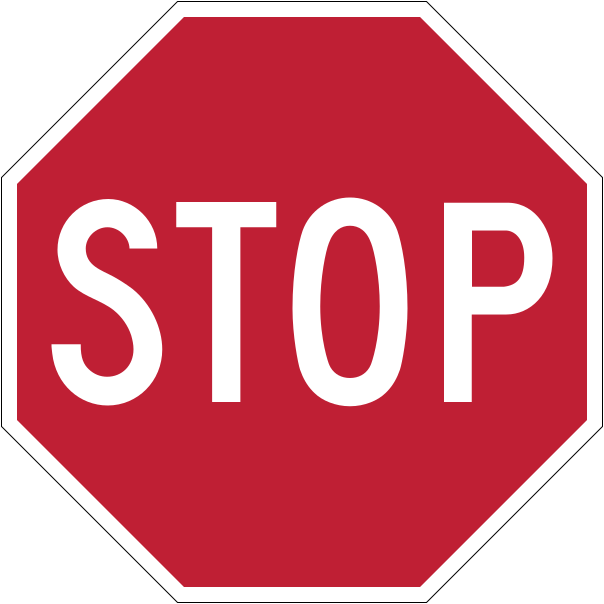
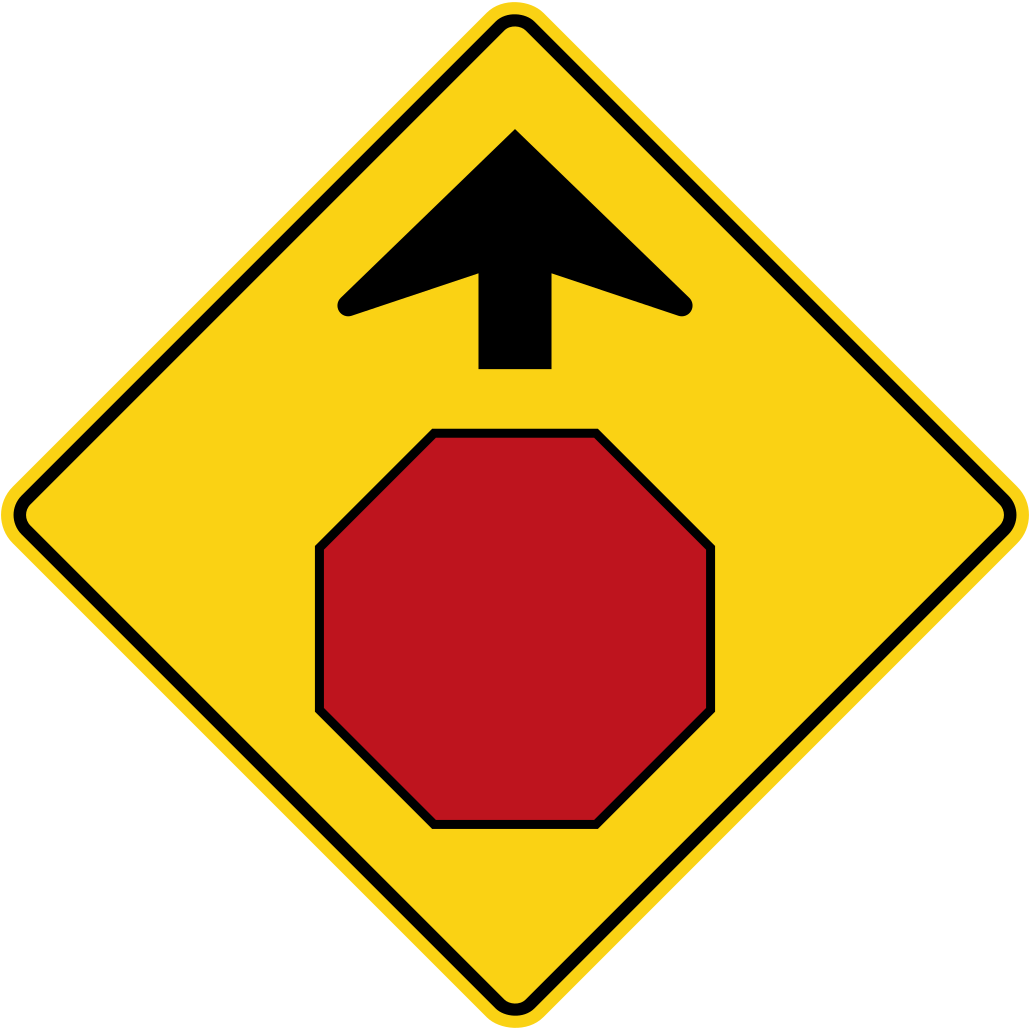
1.Stop signs and all-way stops
- Every stop sign and every red light requires a complete stop. Where a stop line is painted on the pavement, that is where you stop.
- With no stop line, stop before the crosswalk, whether or not it is marked; with no crosswalk, at the sidewalk’s edge; and with no sidewalk, at the edge of the intersection itself.
- When a stop sign controls your approach to an intersection, stop fully behind it and go through only once the way ahead is clear.
- Where every corner has a stop sign, whoever came to a complete stop first goes first, and everyone else yields.
- When two vehicles stop at the same moment, the one on the right has priority and the one on the left waits.
- A flashing red light calls for a full stop, after which you may cross the intersection only once it is safe to do so. Disobeying a stop sign, a traffic light or a railway crossing signal costs 3 demerit points.
Signs in this section
Official source: MTO Driver’s Handbook – Stopping ↗ · MTO Driver’s Handbook – Driving through intersections ↗ · MTO Driver’s Handbook – Traffic lights ↗ · Ontario.ca – Understanding demerit points ↗
2.Who has the right-of-way
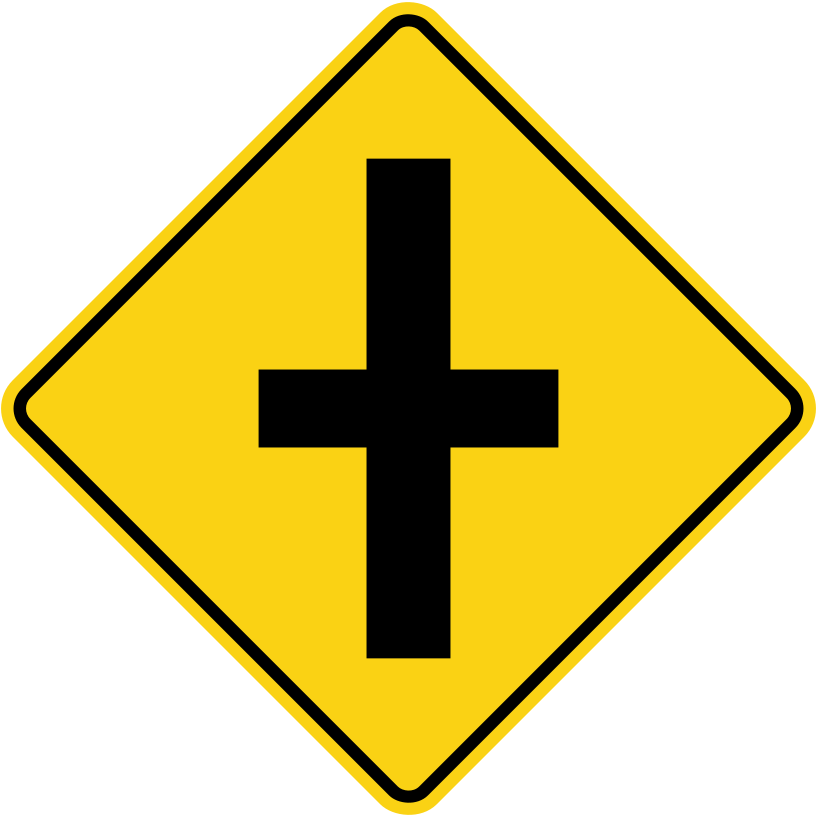
- With no signs or lights at all, a vehicle that reaches the intersection ahead of you goes first; when you arrive together, priority goes to the vehicle on the right.
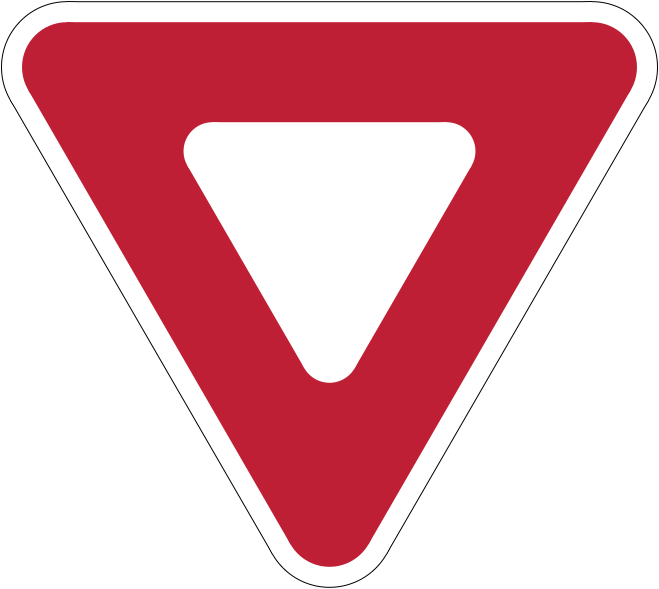
- At a yield sign, slow down, stop if you need to, and let traffic already in the intersection or on the crossing road go ahead of you.
- Coming out of a driveway or private road, you give way to everything already there: vehicles on the road and pedestrians on the sidewalk.
- Turning at an intersection, in either direction, means yielding. For a left turn, let oncoming traffic pass or turn and let pedestrians in or approaching your path finish crossing; for a right turn, let pedestrians in or approaching your path cross first.
- When a power failure puts the traffic lights out, treat the intersection as an all-way stop: give way to vehicles already in it and to vehicles entering from your right, and go through with caution.
- A turn signal is not a claim on the right-of-way; it is still up to you to confirm that the way is clear. Failing to yield when you should costs 3 demerit points.
Signs in this section
Official source: MTO Driver’s Handbook – Driving through intersections ↗ · MTO Driver’s Handbook – Traffic lights ↗ · Ontario.ca – Understanding demerit points ↗
3.Turning left and right
- Signal early when you intend to turn at a corner. Once the way is clear, get into the correct lane: for a right turn that is the lane farthest to the right, and for a left turn the lane farthest to the left of those going your way. Then look both ways and check your blind spots.
- A right turn starts and finishes close to the right edge of the road, unless signs or pavement markings say otherwise. Before turning, check the blind spot over your right shoulder and let any cyclist, limited-speed motorcycle or moped rider clear the intersection first.
- A left turn starts and finishes in the leftmost lane for your direction, unless signs or pavement markings say otherwise. From a two-way road onto another two-way road, that means leaving from the lane beside the centre line and arriving in the lane just right of the centre line.
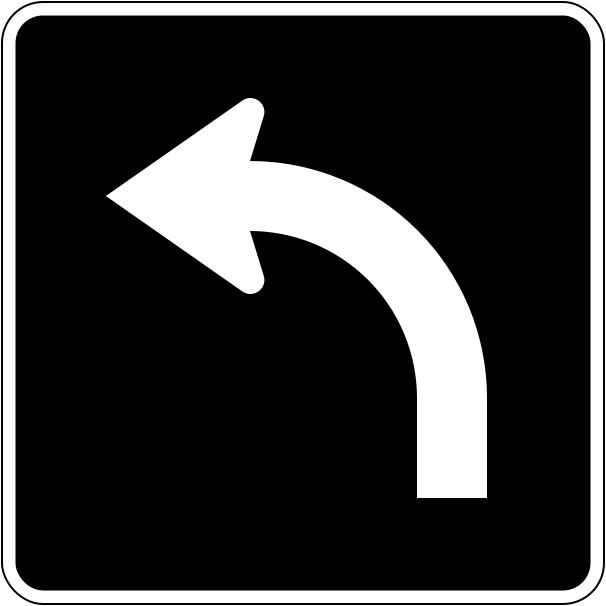
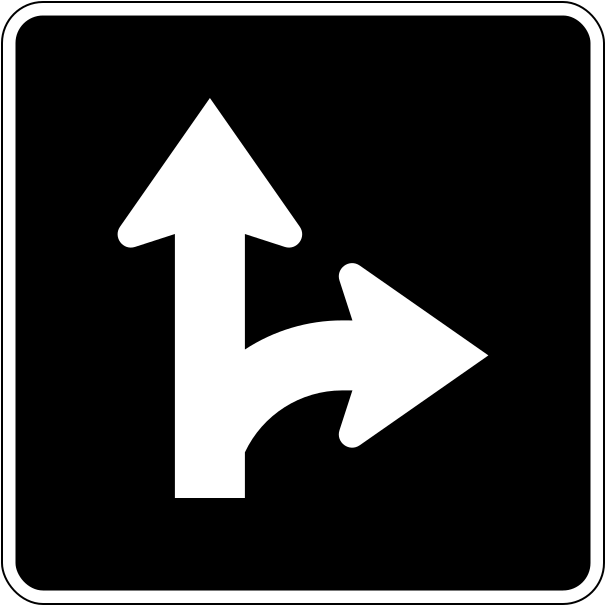
- A white arrow painted in a lane limits that lane to the direction it points. Lane-use signs, overhead or on the pavement ahead of an intersection, set the same kind of rule.
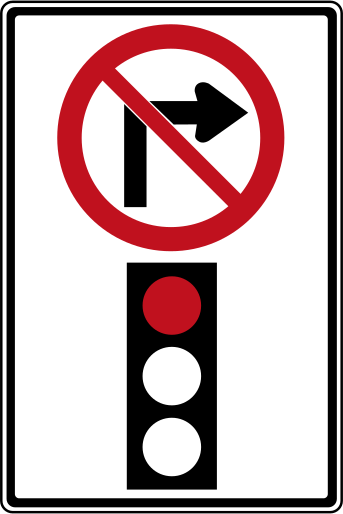
- A right turn on a red light is allowed unless a sign prohibits it, but only after a complete stop and only once the way is clear. Signal the turn, and give way to pedestrians and anyone else using the road.
- On a red light, a left turn is permitted from a one-way road onto another one-way road, after a complete stop and a check that the way is clear; pedestrians and traffic still have priority.
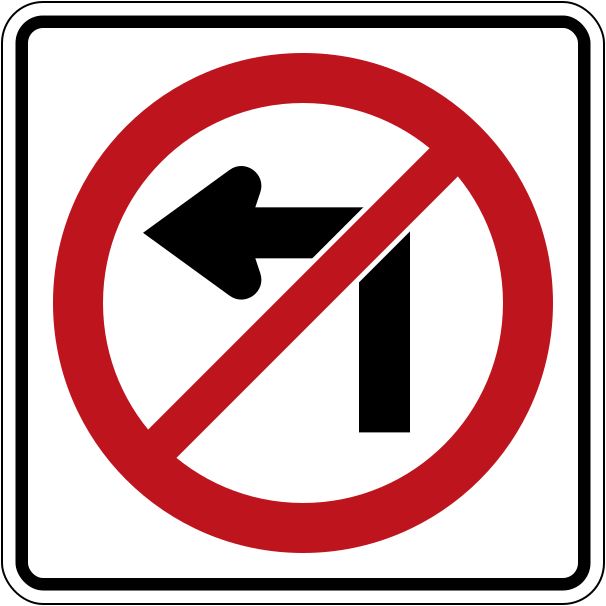
- An improper right turn, an improper left turn, a prohibited turn and failing to signal each add 2 demerit points.
Signs in this section
Official source: MTO Driver’s Handbook – Changing directions ↗ · MTO Driver’s Handbook – Pavement markings ↗ · MTO Driver’s Handbook – Signs ↗ · Ontario.ca – Understanding demerit points ↗
4.U-turns and signalling
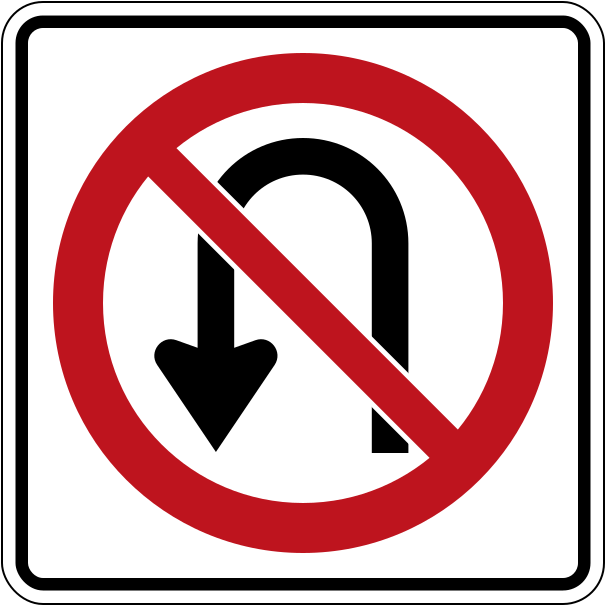
- Look for a sign prohibiting U-turns before you attempt one.
- U-turns are against the law on a curve, on or close to a railway crossing or the crest of a hill, and near a bridge or tunnel that hides the view.
- A U-turn needs a clear view of at least 150 metres each way; without it, do not turn.
- For the U-turn itself, signal right, check your mirror and your shoulder, and move to the right edge of the road. Stop there. Signal left next, wait until the road is clear both ways, then pull out and swing quickly and sharply around into the lane heading the other way.
- Turn signals and brake lights are how you announce what you are about to do: stop, slow down, turn, change lanes, leave the road or pull out of a parking spot. The signal must come well before the move, and it must be the right one.
- Whenever you are about to turn a corner, reverse, change lanes or turn around, check your mirrors and look over your shoulder first, so you know the way is clear and there is room to finish the move safely.
- When the turn signals or brake lights fail, hand and arm signals take their place. Signalling does not create a gap, so move only once it is actually safe.
Signs in this section
Official source: MTO Driver’s Handbook – Changing directions ↗ · MTO Driver’s Handbook – Driving along ↗
5.Pedestrians at crosswalks, crossovers and school crossings
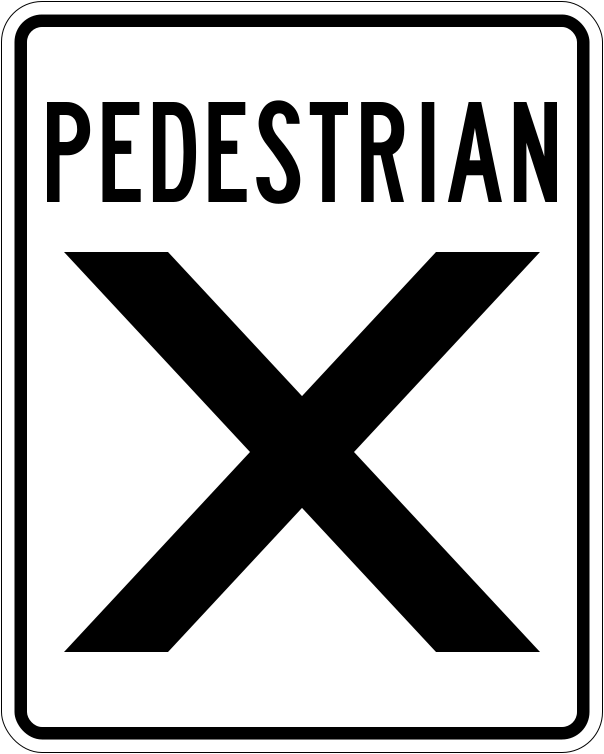
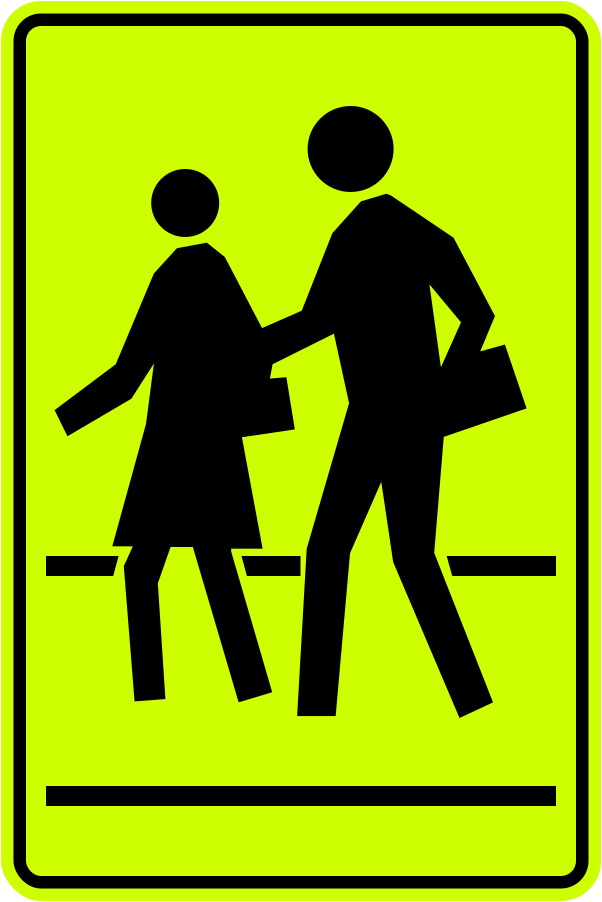
- At a pedestrian crossover, and at a school crossing where a guard is on duty, give pedestrians the right-of-way and wait until they have finished crossing the whole road.
- Drivers and cyclists alike must give pedestrians the right-of-way in a crossover, and may move on only after the pedestrians and any school crossing guard have reached the sidewalk safely. Not stopping at a pedestrian crossover adds 4 demerit points.
- No passing is allowed within 30 metres of a pedestrian crossover, whatever the vehicle ahead is doing.
- When a school crossing guard holds up a red and white stop sign, stop before you reach the crossing and stay put until everyone, the guard included, is off the whole roadway. A driver who ignores this can be fined heavily and receives three demerit points.
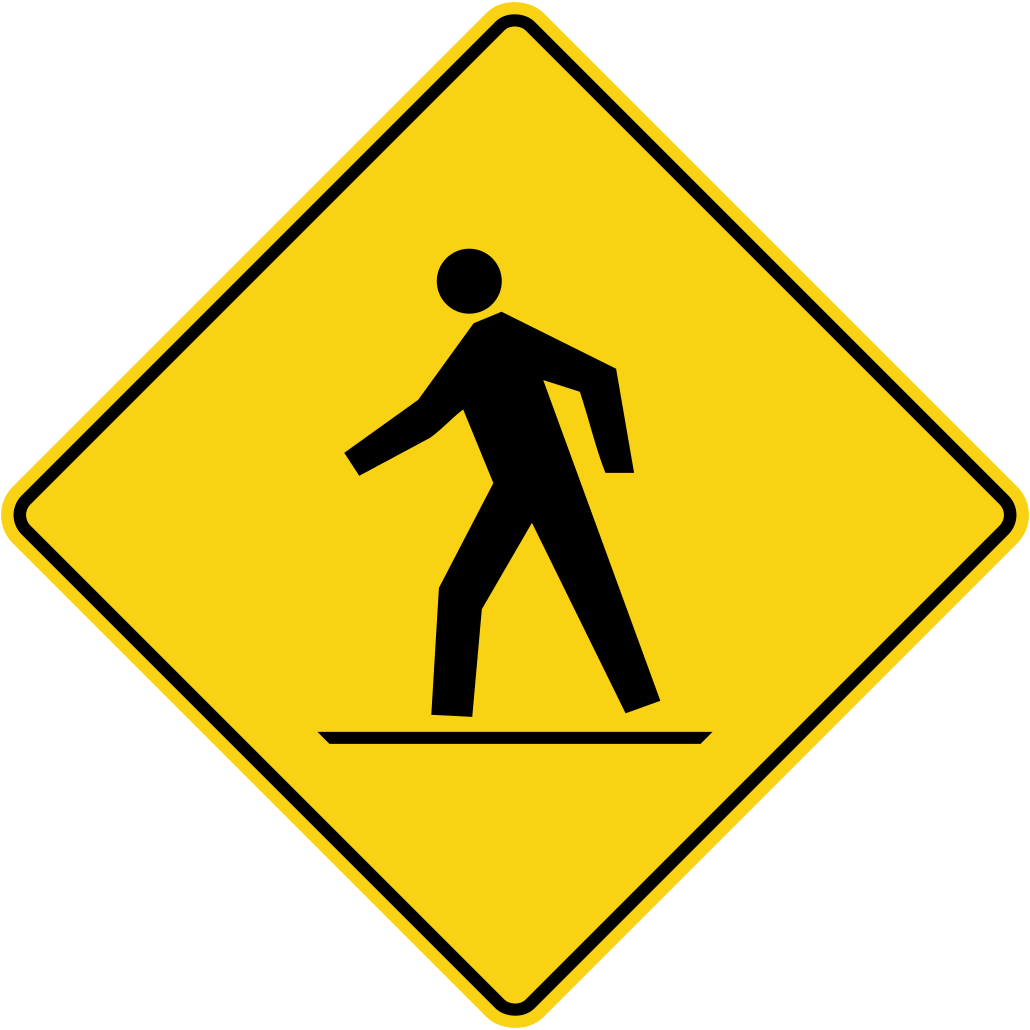
- The walk signal lets a pedestrian cross in the direction it faces, and a pedestrian who is crossing has priority over every vehicle until they reach the other side.
- Older pedestrians and pedestrians with disabilities may take longer to cross, so give them extra time and patience. A white cane or a guide dog tells you the person is blind or has a visual disability.
- Left-turning cars hit far more pedestrians than right-turning ones do: the driver is occupied with the intersection while the person crossing is looking straight ahead.
Signs in this section

Official source: MTO Driver’s Handbook – Driving through intersections ↗ · MTO Driver’s Handbook – Stopping ↗ · Ontario.ca – Understanding demerit points ↗ · MTO Driver’s Handbook – Pedestrian signals ↗ · MTO Driver’s Handbook – Sharing road other road users ↗
6.Roundabouts
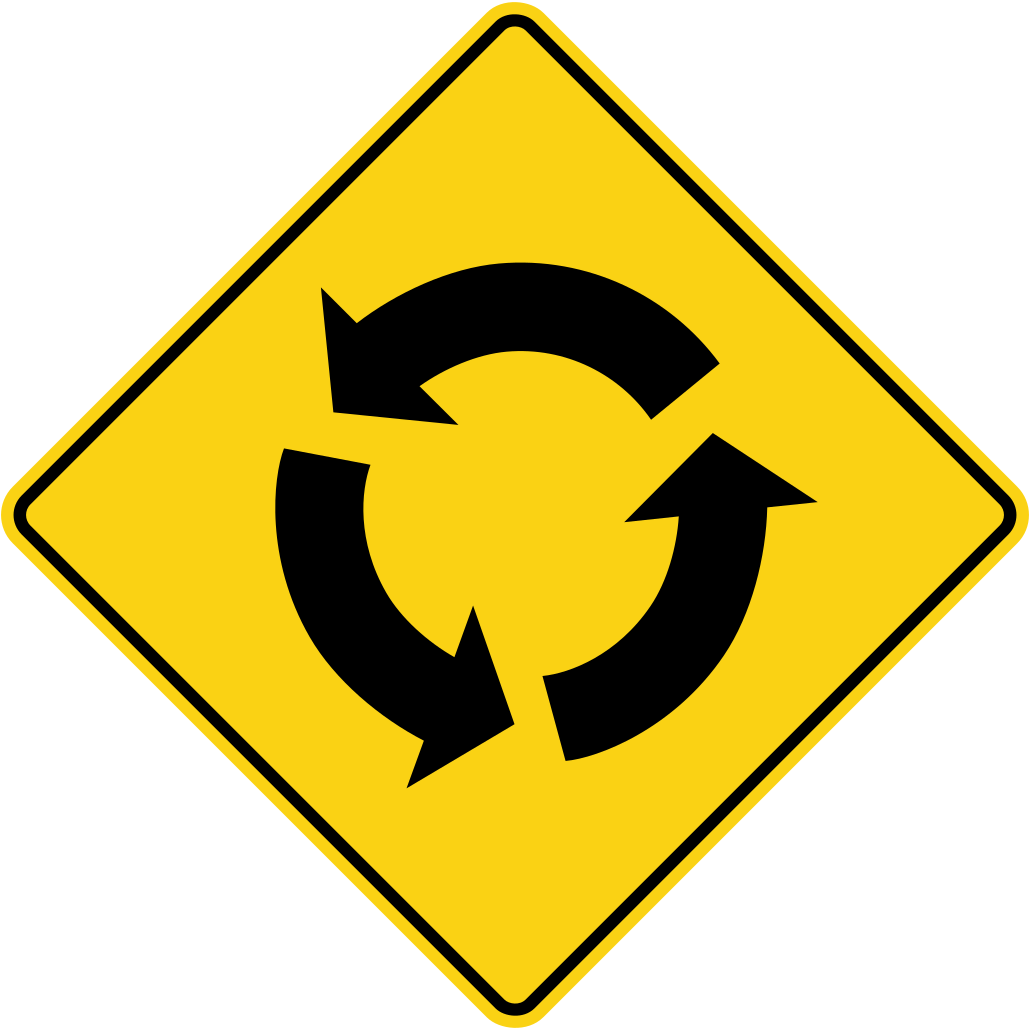
- On the approach, read the signs and decide on your exit. The left lane serves left turns and going straight; the right lane serves right turns and going straight. A left turn from the right lane is not allowed.
- Reduce speed as you come up to the yield line at the entrance, watch for pedestrians there, and hold your lane.
- Vehicles already circulating in the roundabout have priority. As you get ready to enter, watch the traffic coming from your left in particular, and slow down or stop at the yield sign if you need to.
- Go in only when the circulating traffic leaves enough of a gap. Avoid entering right alongside a vehicle that is already in the roundabout: it may be about to leave at the next exit.
- Inside, the central island stays on your left and you circulate counter-clockwise. Lane changes are not allowed within the roundabout, and stopping is only for avoiding a collision.
- Switch on your right-turn signal as soon as you pass the exit before yours, so your exit is signalled, and watch for pedestrians as you leave.
- Give trucks and buses extra room: a large vehicle may need to swing wide approaching the roundabout or while inside it.
Signs in this section
Official source: MTO Driver’s Handbook – Changing directions ↗