
Practice session
Loading…
Every question on this page
The whole pool, with the answer and the explanation for each one. Practise first, then read through anything you were unsure of.
Show all 72 questions with answers
1 of 72 · Regulatory signs
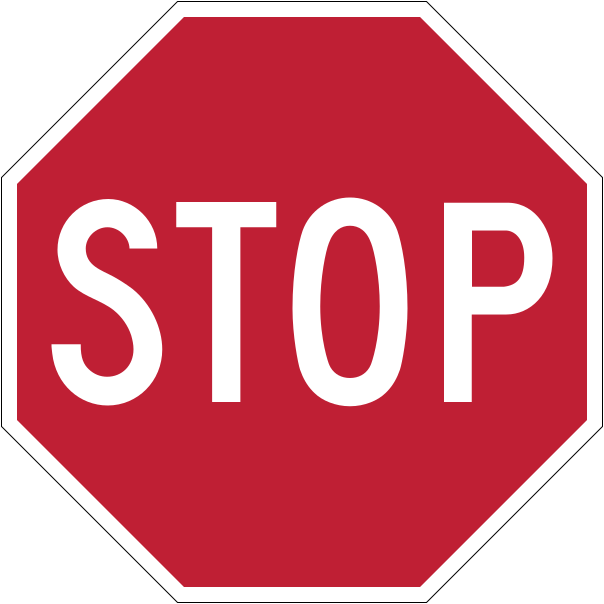
You are approaching this sign. Where must you bring your vehicle to a complete stop?
- A.On the far side of the intersection
- B.Only if another vehicle is coming
- C.At the stop line, or the crosswalk if there is noneAnswer
- D.Slow to a walking pace and keep going
Explanation: Stop at the stop line; if there is none, stop at the crosswalk, and otherwise at the edge of the intersection.
2 of 72 · Regulatory signs
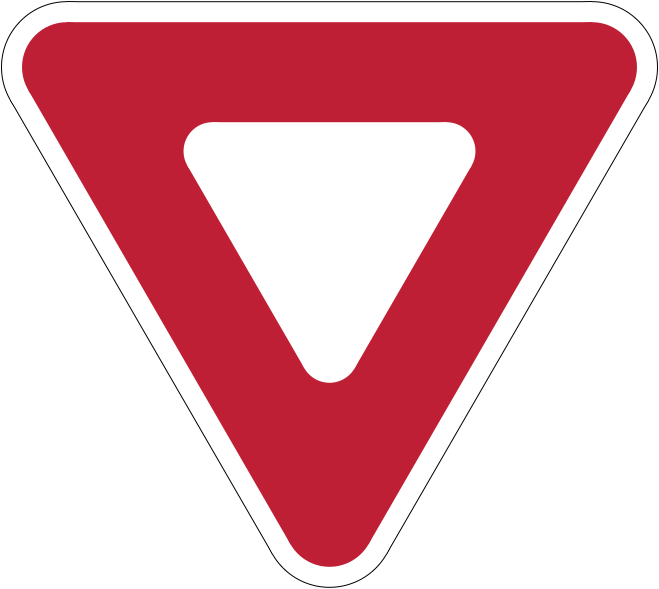
What must you do when you come to this sign?
- A.Slow down, stop if needed, and let other traffic go firstAnswer
- B.Come to a full stop every time, even on an empty road
- C.Speed up so you can merge ahead of other vehicles
- D.Carry on, because crossing traffic must yield to you
Explanation: A yield sign means you must let traffic in the intersection or close to it go first. Stop if necessary and go only when the way is clear.
3 of 72 · Regulatory signs
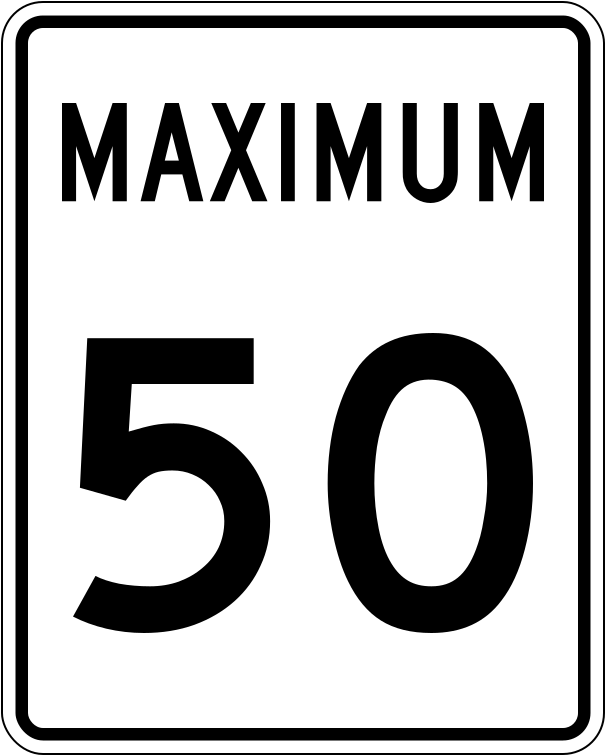
What does the number on this sign tell you?
- A.The slowest speed you are allowed to drive
- B.The average speed of the traffic ahead
- C.A suggested speed for bad weather only
- D.The maximum speed allowed in good conditionsAnswer
Explanation: The posted number is the maximum legal speed in km/h; you must drive slower when conditions are poor.
4 of 72 · Regulatory signs
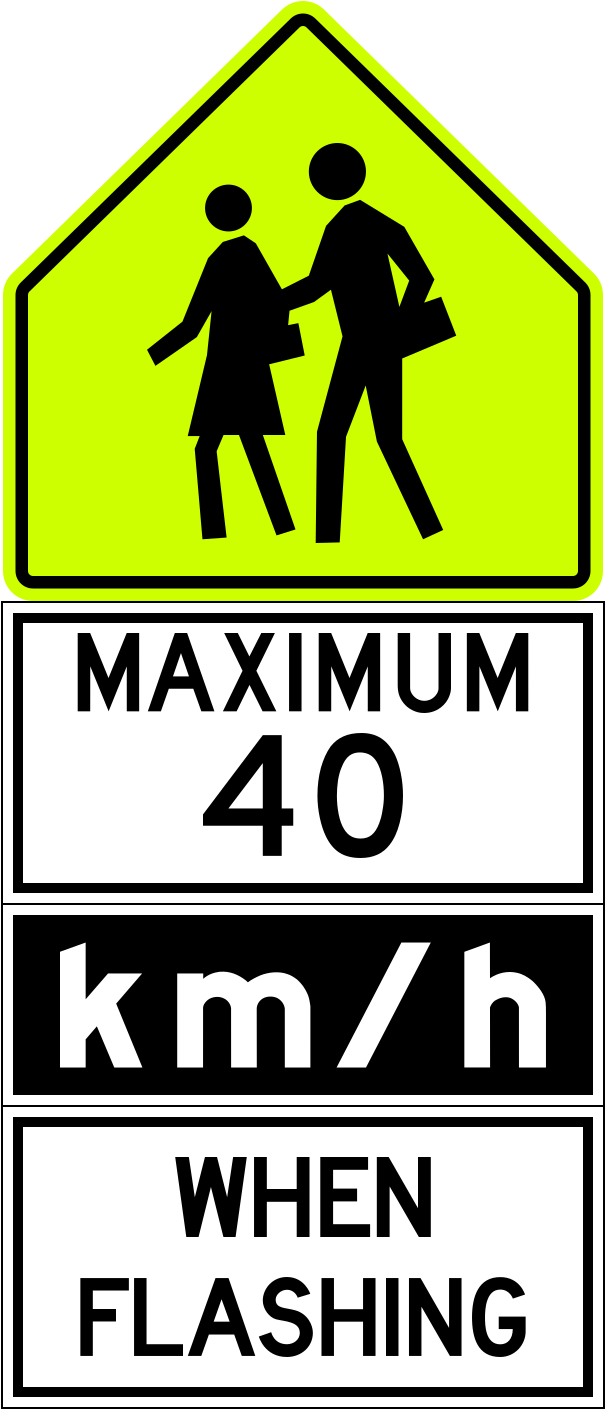
When does the reduced speed limit shown on this sign apply?
- A.Only on weekends and holidays
- B.During school hours, and when the yellow lights are flashingAnswer
- C.Only when a crossing guard is on duty
- D.Every hour of every day, all year round
Explanation: The speed limit in this zone is lower during school hours; observe the speed limit shown when the yellow lights are flashing.
5 of 72 · Regulatory signs
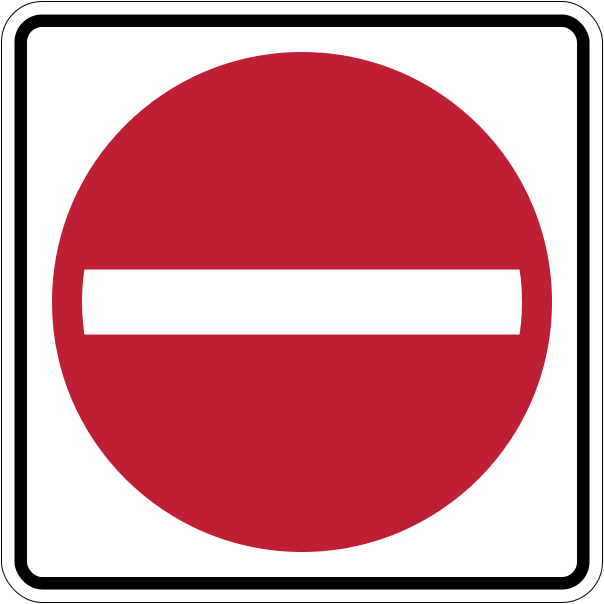
What does this sign mean?
- A.Do not enter this roadAnswer
- B.A construction zone begins here
- C.A passing lane begins here
- D.A railway crossing is just ahead
Explanation: This regulatory sign means: do not enter this road. A red circle with a line through it means the activity shown is not allowed.
6 of 72 · Regulatory signs
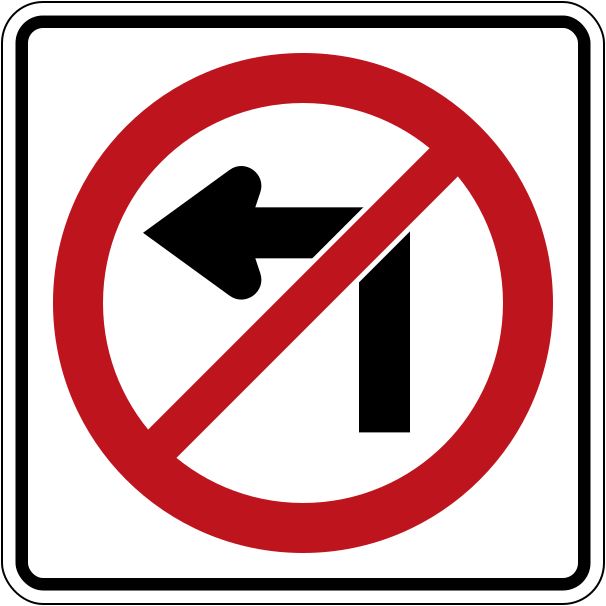
On a sign like this one, what does a red circle with a diagonal line through the symbol mean?
- A.The action shown is allowed here
- B.The action shown is only recommended
- C.The action shown is prohibited hereAnswer
- D.A hazard is coming up on the road ahead
Explanation: A red circle with a slash means the action is prohibited; a green circle means the action is permitted.
7 of 72 · Regulatory signs
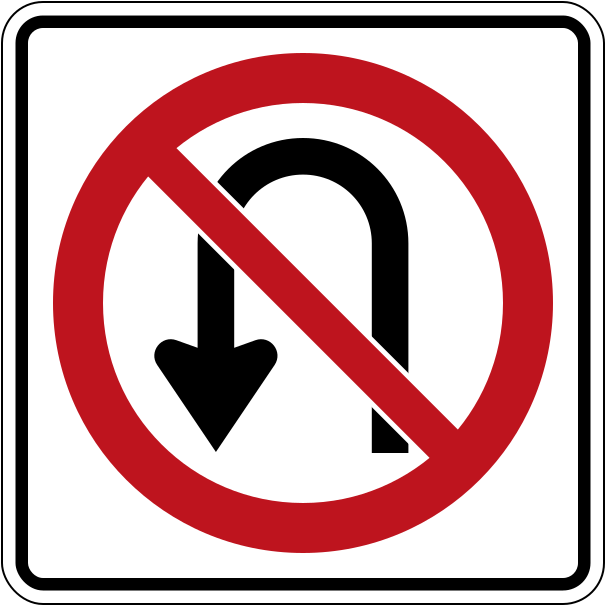
What does this sign mean?
- A.Do not turn right at this intersection
- B.Do not make a U-turn hereAnswer
- C.Do not pass other vehicles here
- D.Keep to the right of the median
Explanation: The curved arrow inside the red circle tells you that turning around to go back the other way is not allowed here.
8 of 72 · Regulatory signs
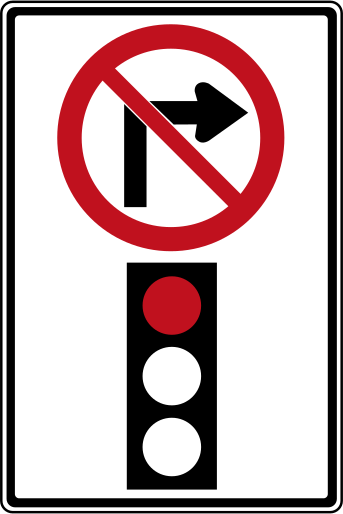
You are stopped at a red light beside this sign. What are you allowed to do?
- A.Turn right after a complete stop if the way is clear
- B.Turn right without stopping when nobody is coming
- C.Turn left onto the crossing road
- D.Wait for the green light before turning rightAnswer
Explanation: This sign means you must not turn right when facing a red light at this intersection, so wait for the green light.
9 of 72 · Regulatory signs
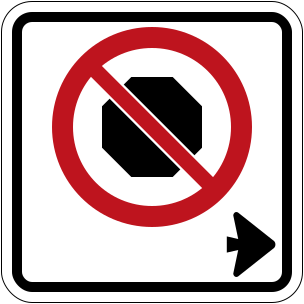
What does this sign tell drivers?
- A.You may park here during the times shown
- B.You may stop briefly to let passengers out
- C.You may not stop here at all during the times shownAnswer
- D.You may wait here as long as you stay in the car
Explanation: No stopping is the strictest of the three: no standing lets you load passengers, and no parking lets you load passengers or goods.
10 of 72 · Regulatory signs
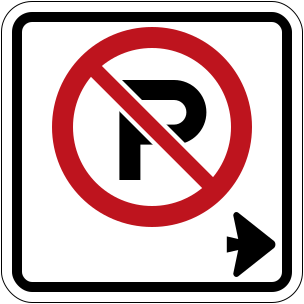
Beside this sign, what are you still allowed to do?
- A.Stop briefly to load or unload passengers or goodsAnswer
- B.Leave the vehicle while you run an errand
- C.Park for up to one hour
- D.Nothing; you may not stop even for a moment
Explanation: A no parking sign forbids leaving your vehicle, but a short stop to pick up or drop off passengers or goods is still allowed.
11 of 72 · Regulatory signs
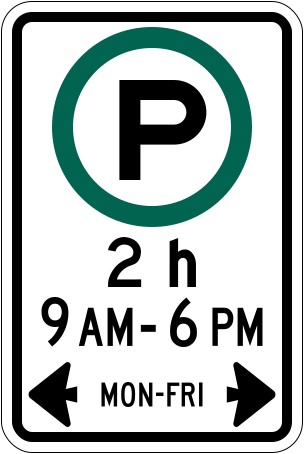
On a regulatory sign such as this one, what does a green circle mean?
- A.The action shown is forbidden
- B.The action shown is permitted under the conditions postedAnswer
- C.It warns of a hazard on the road ahead
- D.The rule applies to commercial vehicles only
Explanation: Green on a regulatory sign means "you may": here, parking is allowed during the times and conditions shown.
12 of 72 · Regulatory signs
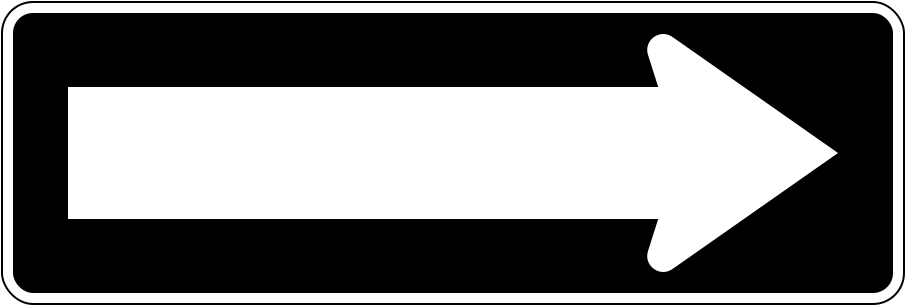
What does this sign mean?
- A.Two-way traffic begins ahead
- B.The road curves in the direction shown
- C.This lane is reserved for buses
- D.Traffic may travel only in the direction of the arrowAnswer
Explanation: On a one-way road every vehicle must travel in the direction of the arrow; driving against it is going the wrong way.
13 of 72 · Regulatory signs
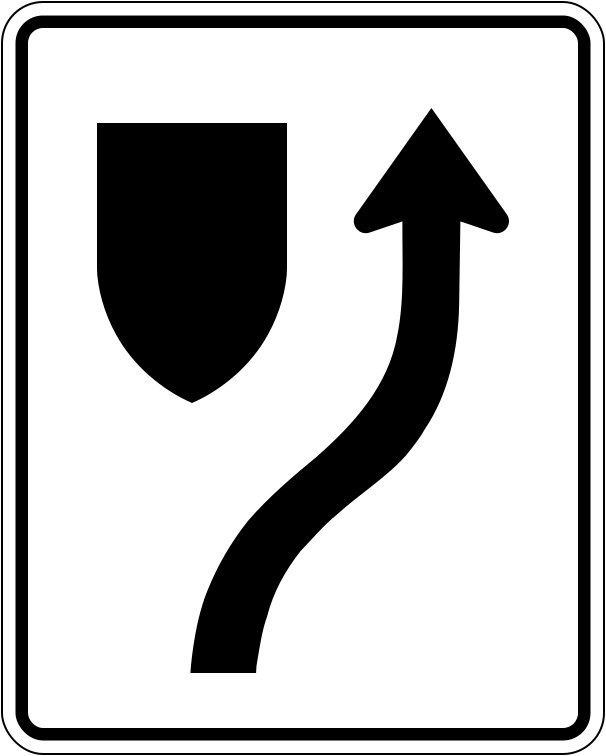
What does this sign tell you to do?
- A.Keep to the right of the traffic islandAnswer
- B.Move left because the right lane is ending
- C.Turn right at the next intersection
- D.Pull onto the shoulder to let traffic pass
Explanation: This regulatory sign means you must keep to the right of the traffic island.
14 of 72 · Regulatory signs
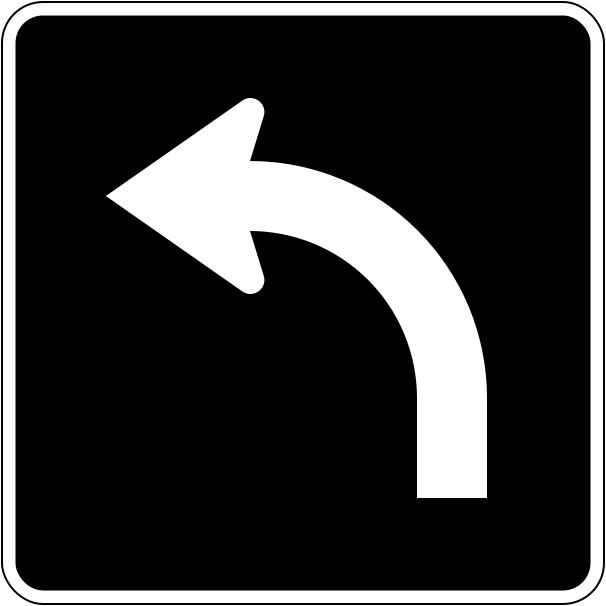
You are driving in the lane marked by this sign. What must you do at the intersection?
- A.Drive straight through the intersection
- B.Either go straight ahead or turn left
- C.Turn leftAnswer
- D.Turn right from this lane
Explanation: These signs tell drivers the direction they must travel: a single left arrow means the driver in that lane must turn left.
15 of 72 · Regulatory signs
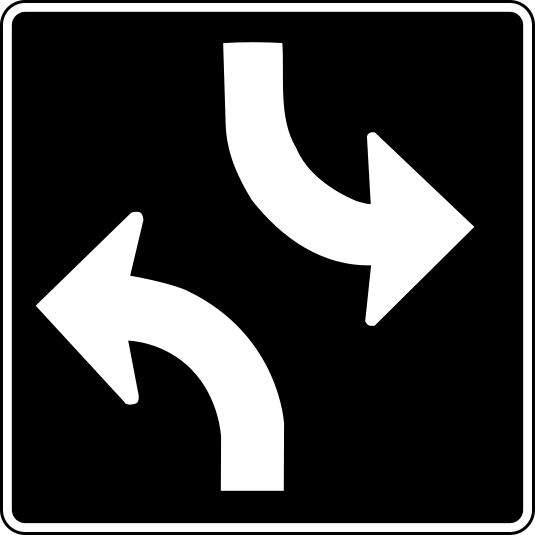
How may you use the centre lane marked by this sign?
- A.As a passing lane when traffic is heavy
- B.As an extra through lane during rush hour
- C.For parking outside the posted hours
- D.Only for left turns, by traffic from either directionAnswer
Explanation: The sign means the lane is only for two-way left turns, so it is not a through lane, a passing lane or a parking space.
16 of 72 · Regulatory signs
Who may use the lane marked by this sign?
- A.Any vehicle that is travelling faster than the traffic
- B.Buses, and passenger vehicles carrying the minimum number of passengers specifiedAnswer
- C.Only trucks that are making deliveries
- D.Any vehicle, as long as it does not stop
Explanation: Only public vehicles such as buses, or passenger vehicles carrying a specified minimum number of passengers, may use this lane.
17 of 72 · Regulatory signs
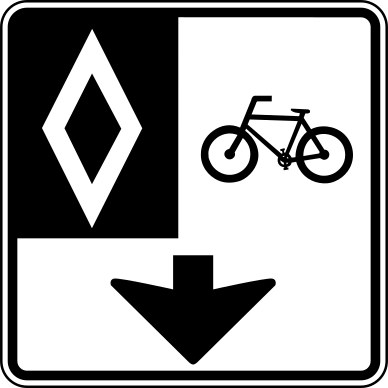
What does this sign mean for the driver of a motor vehicle?
- A.Bicycles are not allowed on this road
- B.Pedestrians may not walk along this road
- C.The lane is reserved for cyclistsAnswer
- D.Cyclists may be crossing the road ahead
Explanation: Bike lanes are reserved for cyclists and are typically marked by a solid white line. Enter one only when you need to turn right at a corner or driveway, and only after making sure you can do so safely.
18 of 72 · Regulatory signs
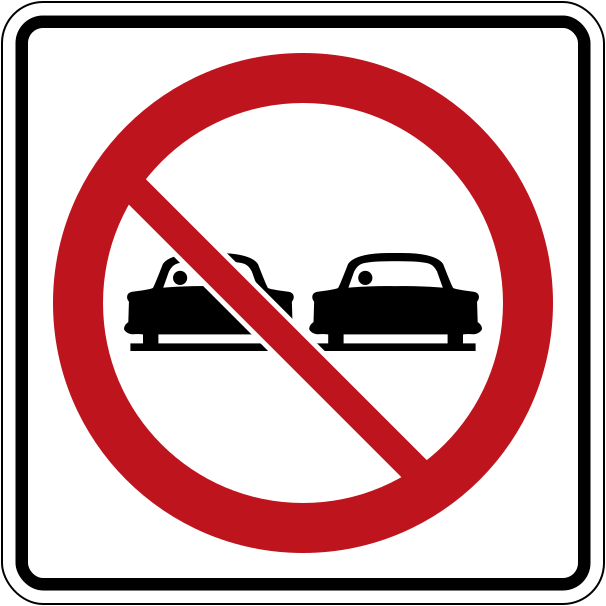
What must you not do on the section of road marked by this sign?
- A.Change lanes to the right
- B.Drive more slowly than the posted limit
- C.Stop at the side of the road
- D.Pass the vehicle ahead of youAnswer
Explanation: This regulatory sign means: do not pass on this road.
19 of 72 · Regulatory signs
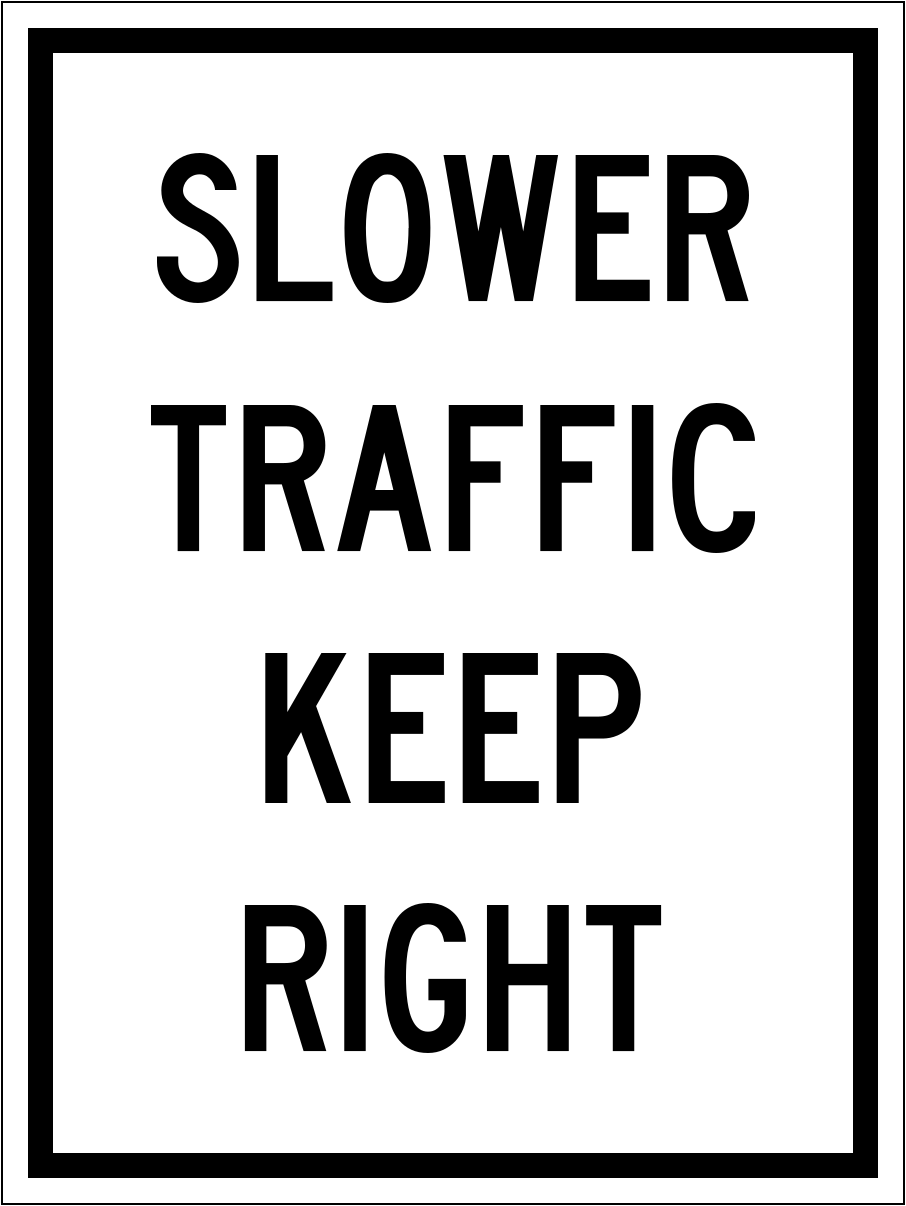
You are driving more slowly than the traffic around you and you see this sign. What should you do?
- A.Stay in the left lane and keep your speed
- B.Move into the right-hand laneAnswer
- C.Pull onto the shoulder and stop
- D.Speed up to the maximum posted limit
Explanation: This regulatory sign means slow traffic on multi-lane roads must keep right.
20 of 72 · Regulatory signs
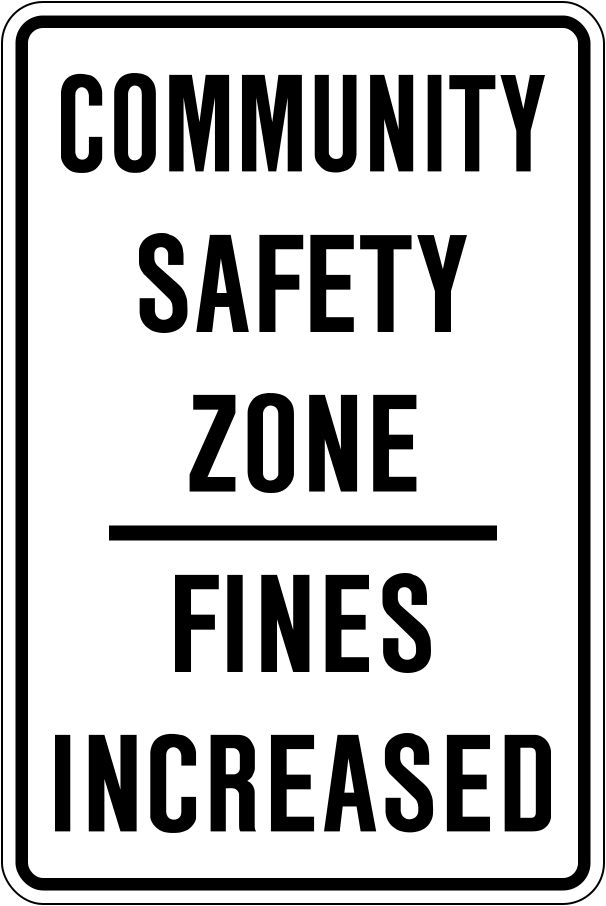
What is special about the stretch of road that starts at this sign?
- A.Fines for traffic offences are increased thereAnswer
- B.Parking is free at any hour
- C.The speed limit is always 40 km/h
- D.Only local traffic may use the road
Explanation: The sign marks an area where the community has identified a special risk to pedestrians. Traffic related offences committed within the zone are subject to increased fines.
21 of 72 · Regulatory signs
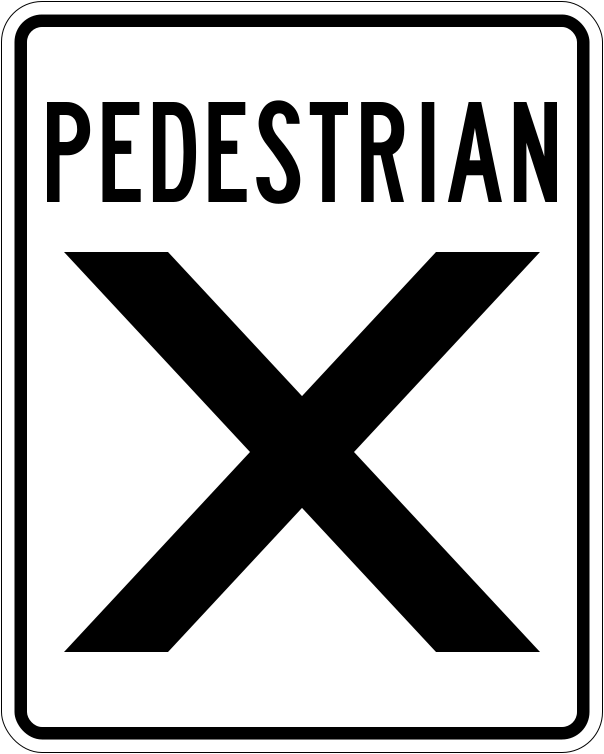
A pedestrian steps onto the crossing marked by this sign. What must you do?
- A.Slow down and steer around the pedestrian
- B.Stop only once the pedestrian passes the centre line
- C.Stop and stay stopped until the pedestrian has cleared the roadAnswer
- D.Sound your horn so the pedestrian hurries
Explanation: At a pedestrian crossover you must yield the whole roadway and wait until the pedestrian is off it; you also may not pass within 30 metres of the crossover.
22 of 72 · Warning signs
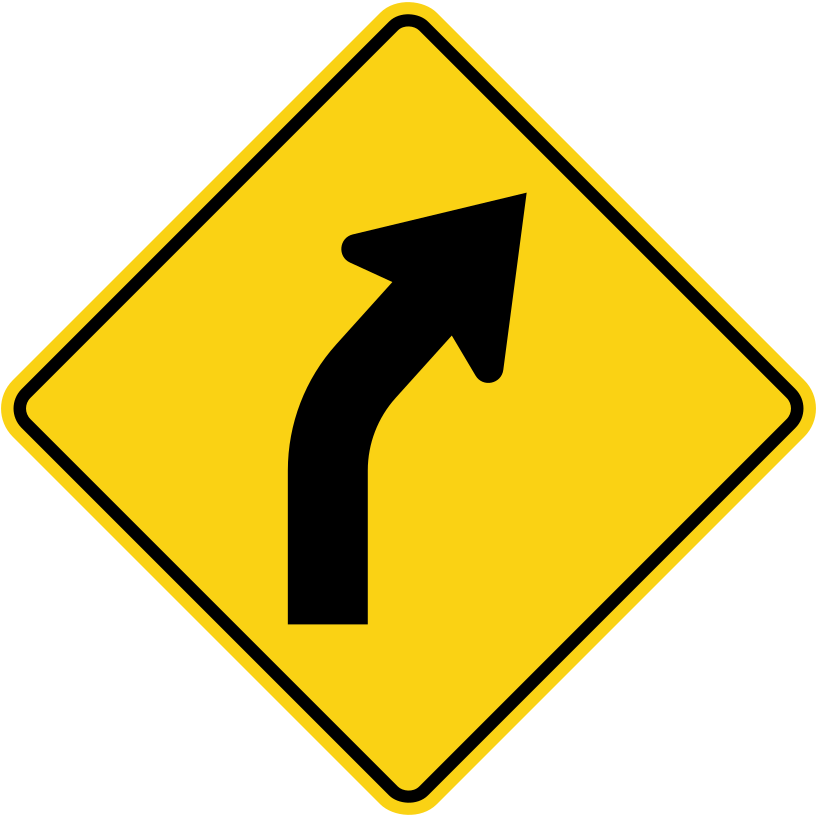
A yellow diamond-shaped sign such as this one tells you about…
- A.a law you must obey at that spot
- B.a hazard or a change in the road aheadAnswer
- C.road work that is under way
- D.the distance to the next town
Explanation: Warning signs are usually diamond-shaped with a yellow background and black symbols. They warn of dangerous or unusual conditions ahead such as a curve, turn, dip or sideroad.
23 of 72 · Warning signs
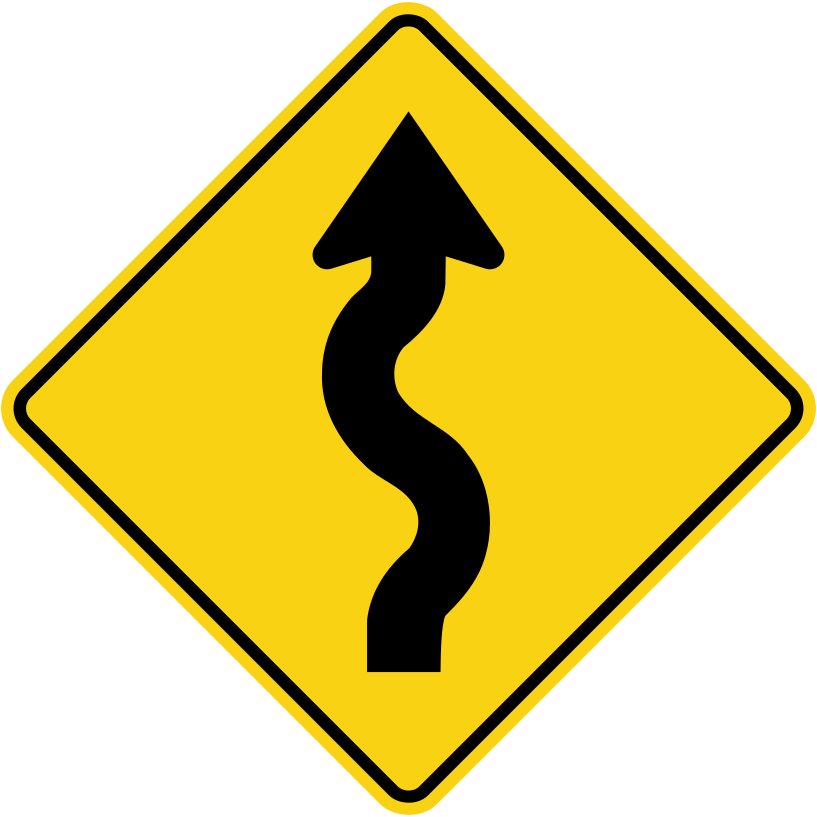
What does this sign warn you about?
- A.One sharp bend to the right
- B.The road ends a short distance ahead
- C.A steep downhill grade
- D.The road ahead is windingAnswer
Explanation: This warning sign means: winding road ahead.
24 of 72 · Warning signs
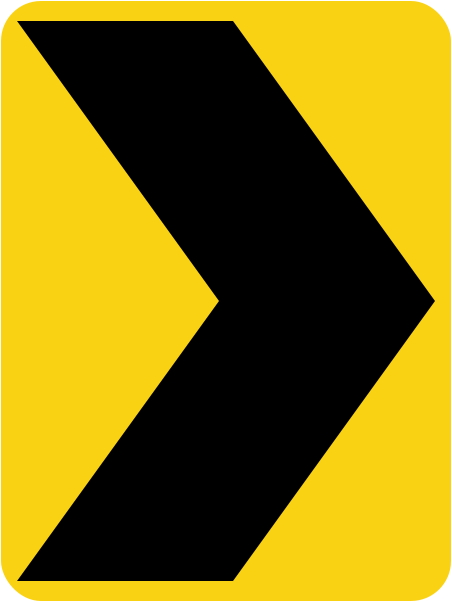
Several of these signs are lined up along the outside of a bend. What do they tell you?
- A.Traffic will merge from the right
- B.The lane is closed a short distance ahead
- C.The road turns sharply in the direction they pointAnswer
- D.Passing is permitted along this stretch
Explanation: Chevron (arrowhead) signs are posted in groups to guide drivers around sharp curves in the road.
25 of 72 · Warning signs
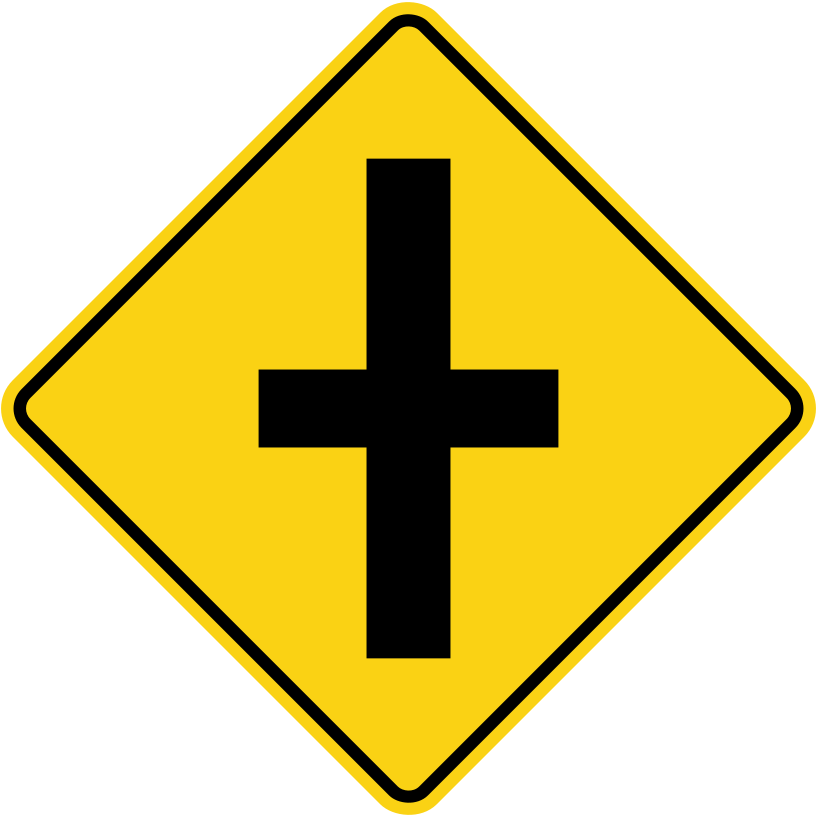
What does this sign warn you of?
- A.An intersection is aheadAnswer
- B.A side road that joins only from the right
- C.A roundabout a short distance ahead
- D.A railway crossing ahead
Explanation: This warning sign means an intersection is ahead; the arrow shows which direction of traffic has the right-of-way.
26 of 72 · Warning signs
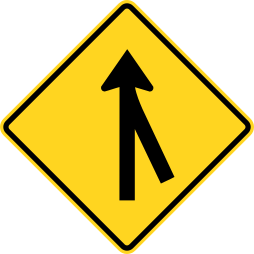
This sign is posted where traffic from another road joins your lane. What should you do?
- A.Keep your speed; merging drivers must stop for you
- B.Drive onto the shoulder to make room
- C.Stop in your lane until the other vehicle has passed
- D.Adjust your speed or lane so traffic can merge safelyAnswer
Explanation: Merging works when both drivers cooperate: change your speed or move over so the other vehicle can slot into a gap.
27 of 72 · Warning signs
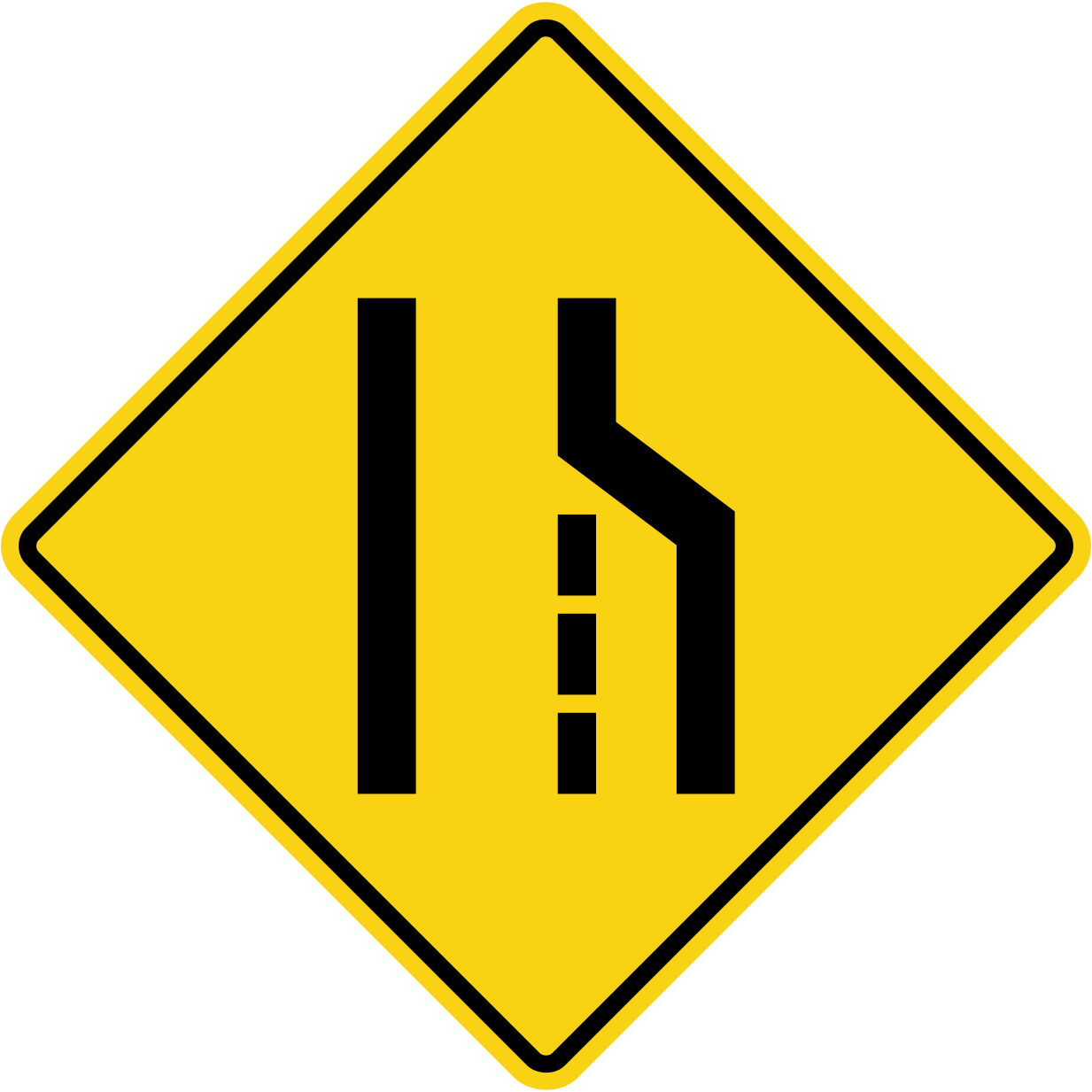
You are in the right-hand lane when you see this sign. What should you do?
- A.Stop where the lane ends and wait for a gap
- B.Signal and move into the left lane when it is safeAnswer
- C.Carry on along the shoulder past the end of the lane
- D.Speed up to pass as many vehicles as you can
Explanation: The sign gives you time to merge left early, before the pavement runs out, instead of forcing your way in at the last moment.
28 of 72 · Warning signs
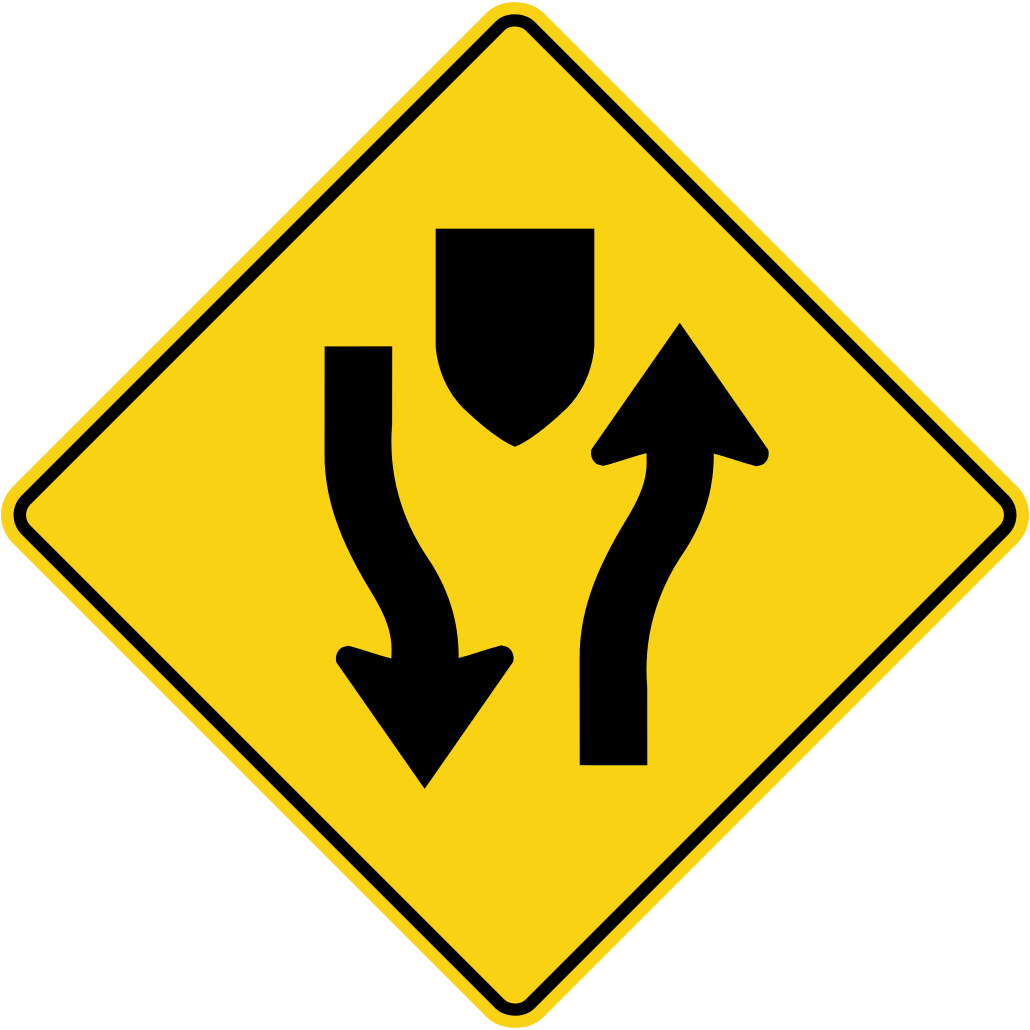
What does this sign tell you?
- A.The divided highway you are on is about to end
- B.You are leaving a one-way road for two-way traffic
- C.The road ahead is divided; keep to the right-hand roadAnswer
- D.A passing lane begins a short distance ahead
Explanation: Divided highway begins: traffic travels in both directions on separated roads ahead. Keep to the right-hand road.
29 of 72 · Warning signs
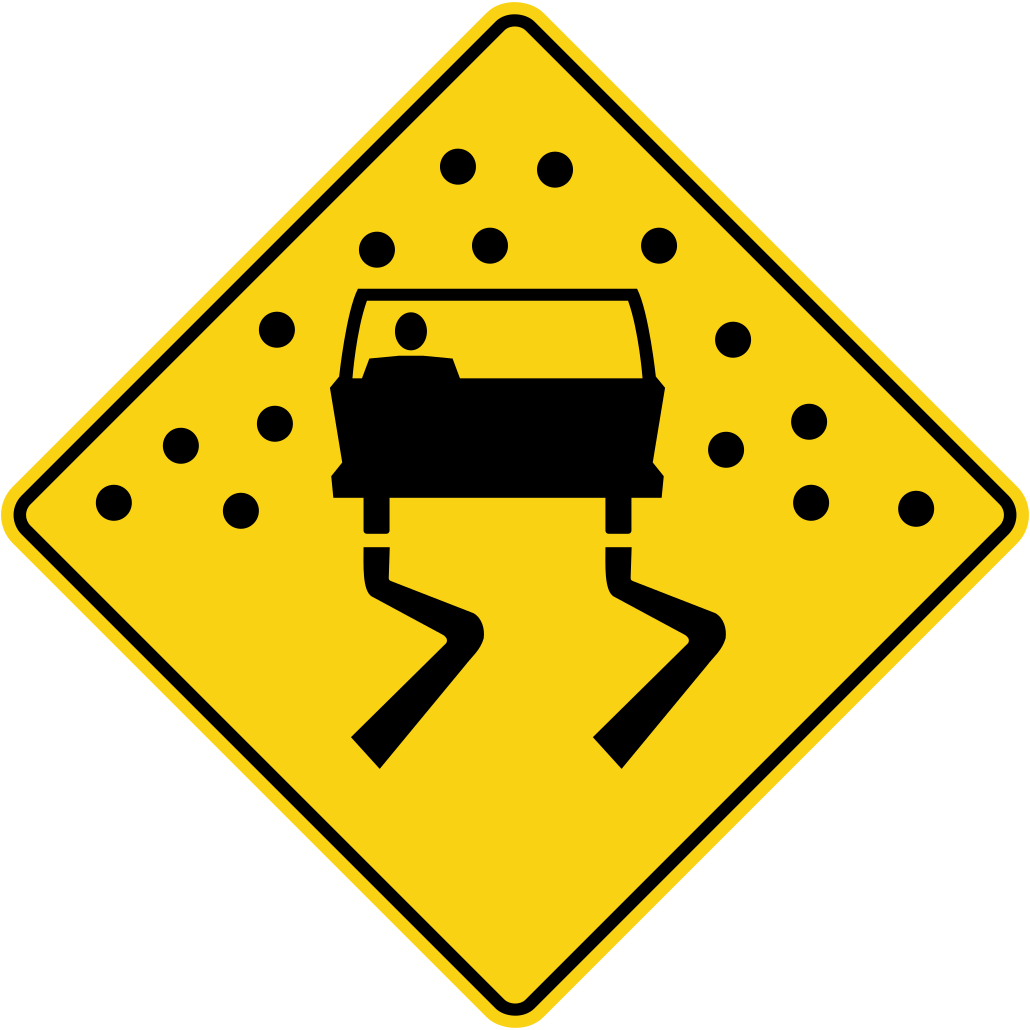
The road is wet and you see this sign. How should you drive?
- A.Brake firmly to test how much grip you have
- B.Drive faster so the tires keep their grip
- C.Follow the vehicle ahead more closely
- D.Slow down and drive with cautionAnswer
Explanation: This warning sign means the pavement is slippery when wet: slow down and drive with caution.
30 of 72 · Warning signs
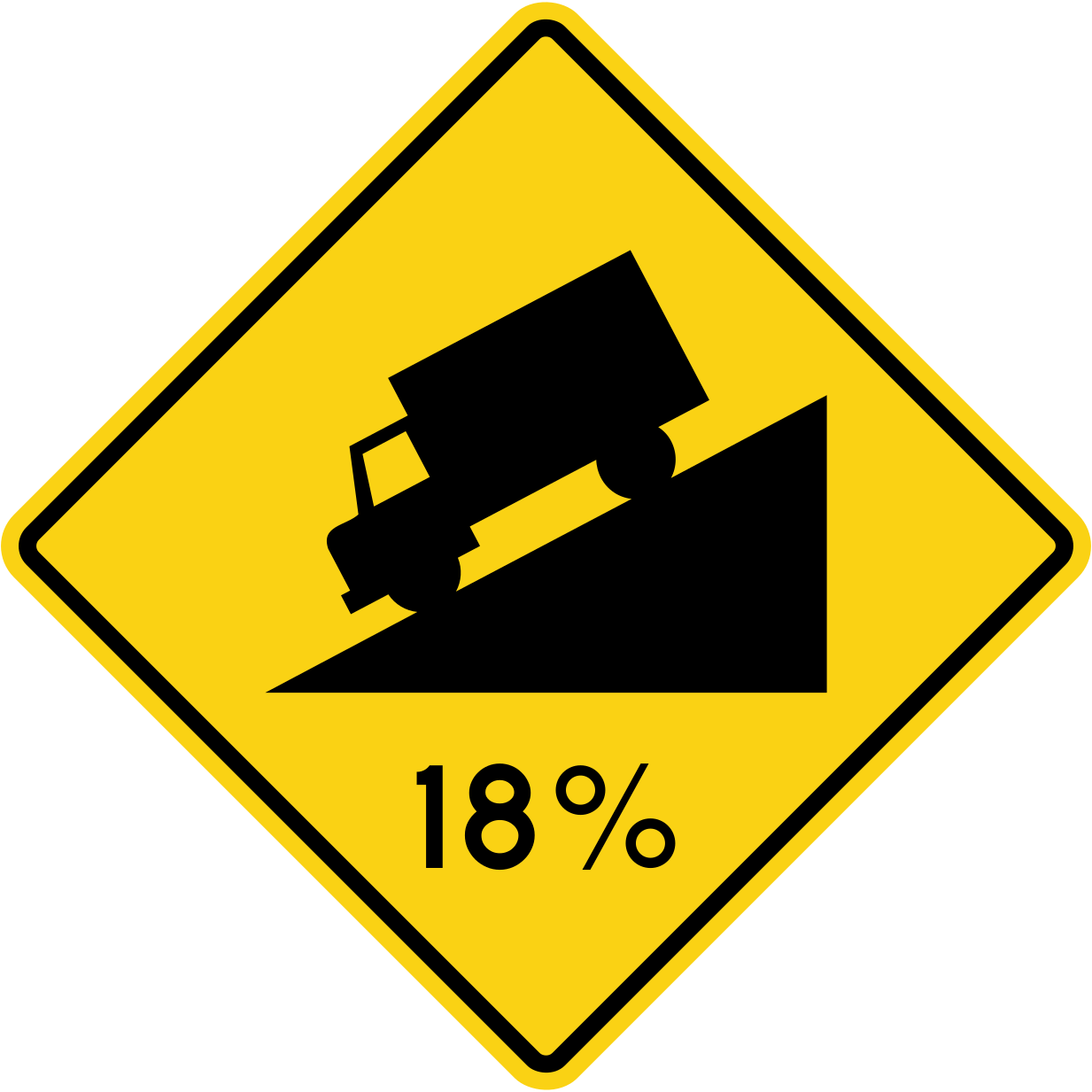
What should you be ready to do when you see this sign?
- A.Shift into a lower gear to help control your speedAnswer
- B.Accelerate to build up momentum
- C.Coast down the hill in neutral
- D.Pull over and let the engine cool
Explanation: This warning sign means a steep hill is ahead and you may need to use a lower gear.
31 of 72 · Warning signs
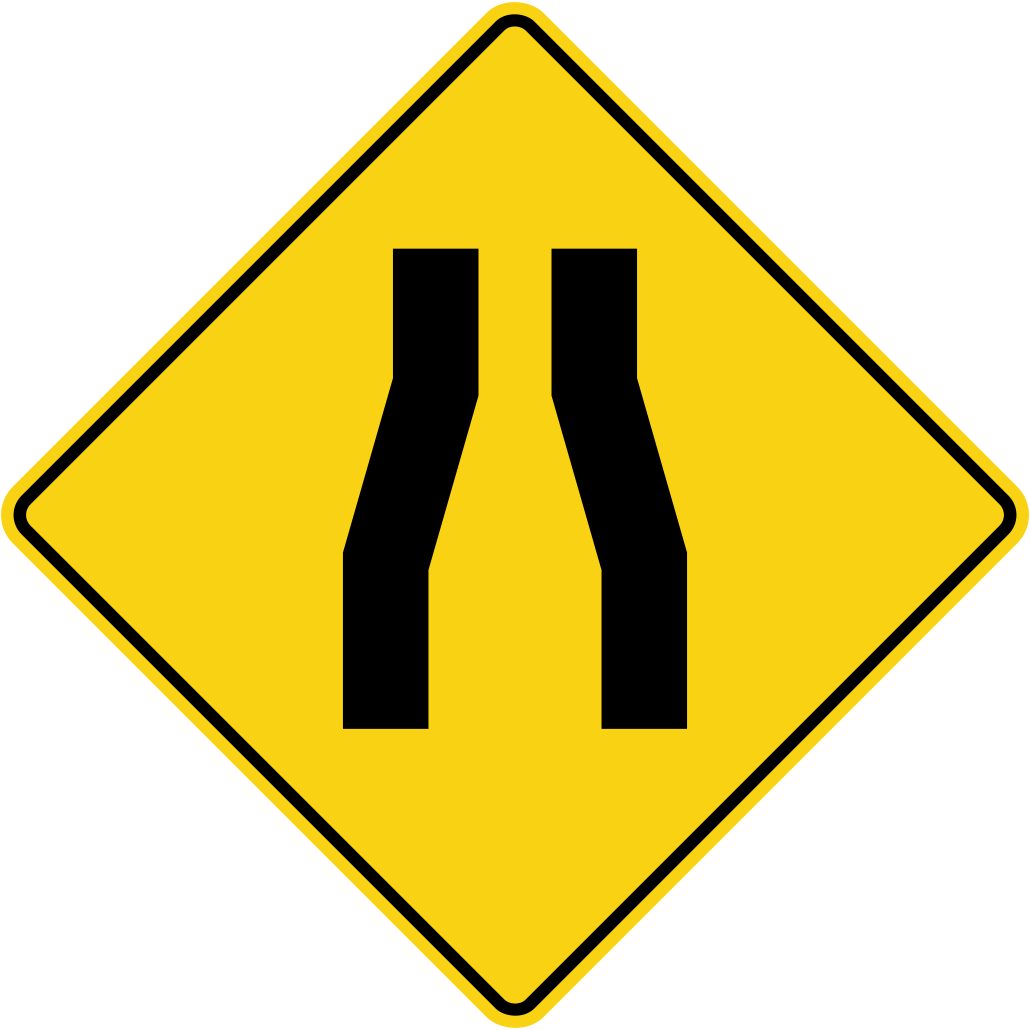
What does this sign warn you about?
- A.Your lane disappears completely a short distance ahead
- B.The pavement narrows aheadAnswer
- C.There is a bump or rough pavement ahead
- D.Traffic will merge into your lane from the left
Explanation: This warning sign means the pavement narrows ahead. A separate sign is used to warn of a narrow bridge.
32 of 72 · Warning signs
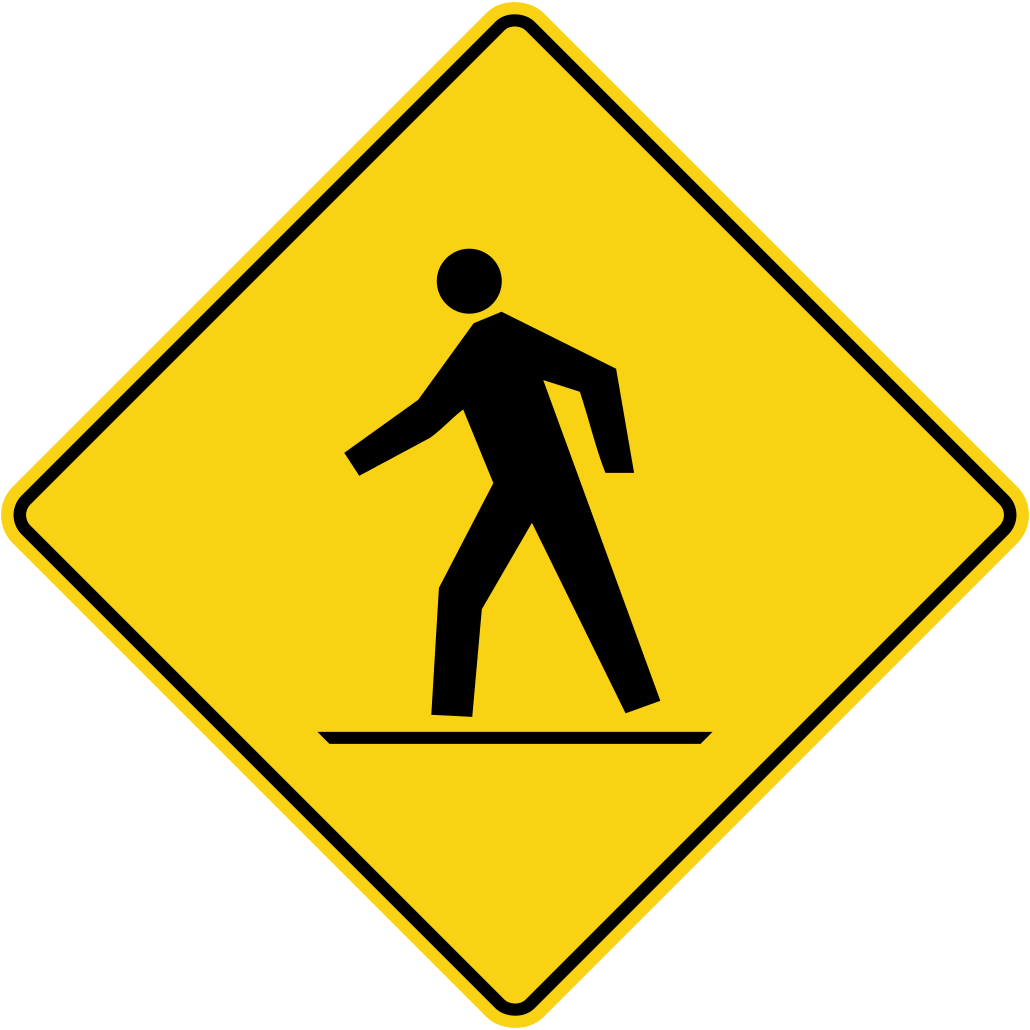
What does this sign tell you?
- A.Children are playing on the road
- B.A bus stop is located just ahead
- C.The sidewalk ends a short distance ahead
- D.Watch for pedestrians and be prepared to share the road with themAnswer
Explanation: This warning sign tells you to watch for pedestrians and be prepared to share the road with them.
33 of 72 · Warning signs
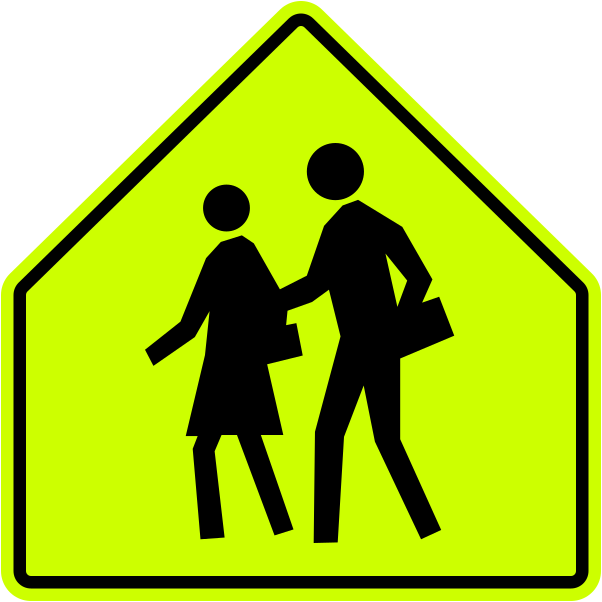
A five-sided fluorescent yellow-green sign like this one means…
- A.a hospital is close by
- B.a picnic area is open nearby
- C.you are entering a school areaAnswer
- D.cyclists share the road ahead
Explanation: A school zone sign is five-sided with a fluorescent yellow/green background and black symbols. It warns that you are coming to a school zone: slow down, drive with extra caution and watch for children.
34 of 72 · Warning signs
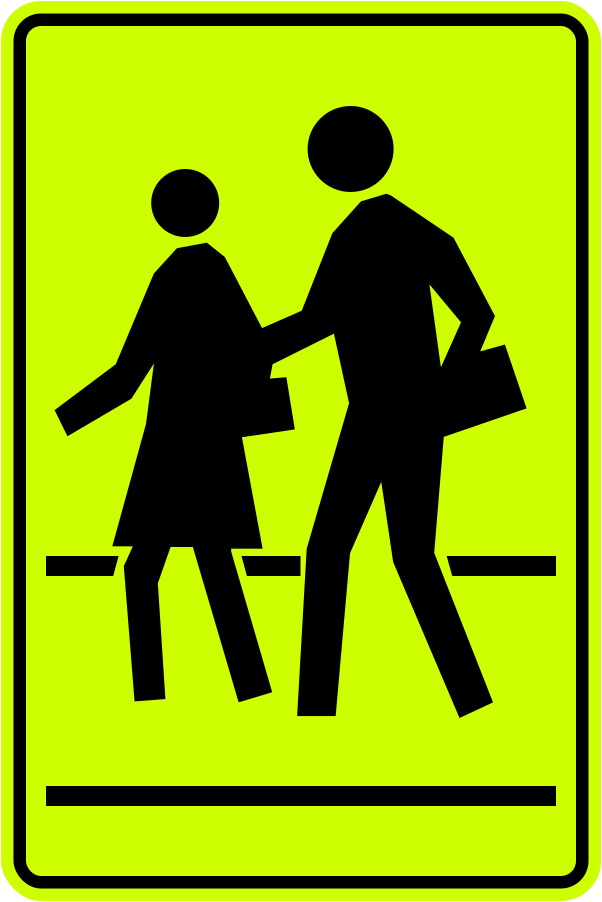
A crossing guard is holding up a stop sign at the crossing marked by this sign. What must you do?
- A.Stop and wait until the guard and children have left the roadAnswer
- B.Drive slowly past behind the children
- C.Go ahead once the children reach the other half of the road
- D.Sound your horn and keep going
Explanation: You must obey a school crossing guard and remain stopped until both the children and the guard are completely off the roadway.
35 of 72 · Warning signs
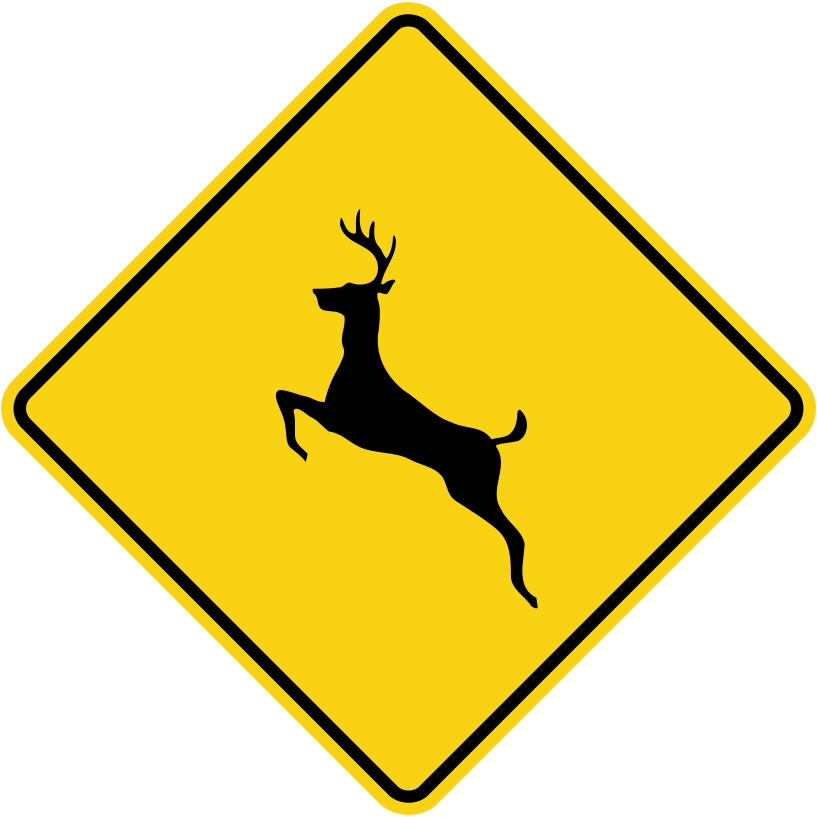
You see this sign on a country road. When do you need to be most alert?
- A.Around noon on sunny days
- B.At dawn and dusk, when animals move mostAnswer
- C.Only during the winter months
- D.Only when there is snow on the ground
Explanation: Animal crossing signs warn of large animals such as deer crossing the road. Be especially cautious during dusk-to-dawn hours, when wild animals are most active.
36 of 72 · Warning signs
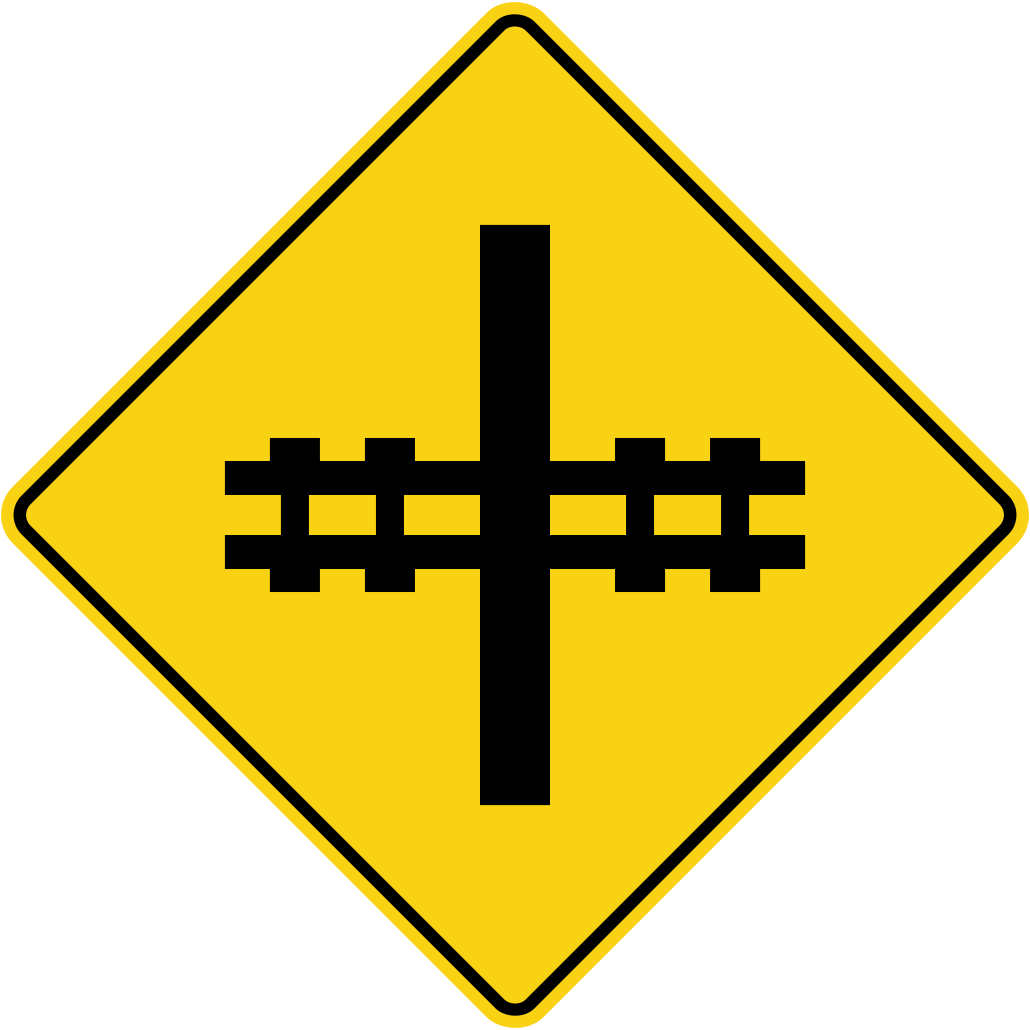
What does this warning sign mean?
- A.A crossroad is a short distance ahead
- B.A hospital zone starts here
- C.A railway crossing is ahead; be ready to stopAnswer
- D.The road ends a short distance ahead
Explanation: The sign means a railway crossing is ahead: be alert for trains. It also shows the angle at which the railway tracks cross the road.
37 of 72 · Warning signs

You reach a railway crossing marked by this sign and a train is coming. How far from the nearest rail must you stop?
- A.At least 2 metres
- B.At least 3 metres
- C.At least 15 metres
- D.At least 5 metresAnswer
Explanation: If a train is coming, stop at least five metres from the nearest rail or gate, and do not cross the track until you are sure the train or trains have passed.
38 of 72 · Warning signs
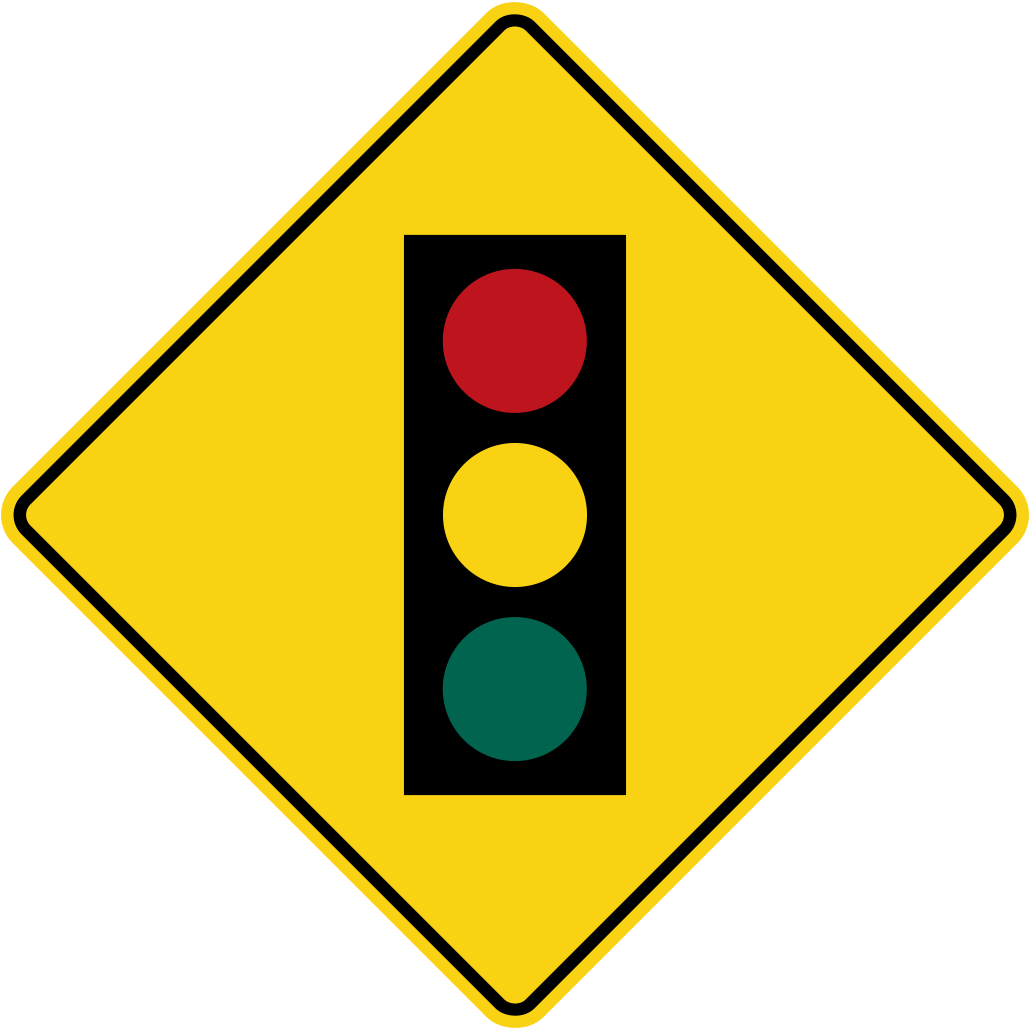
What does this sign tell you?
- A.A stop sign is posted at the next corner
- B.Traffic lights are ahead; slow down and be ready to stopAnswer
- C.The lights at the next intersection are out of service
- D.Turns are banned at the next intersection
Explanation: This warning sign means traffic lights are ahead: slow down and be ready to stop.
39 of 72 · Warning signs
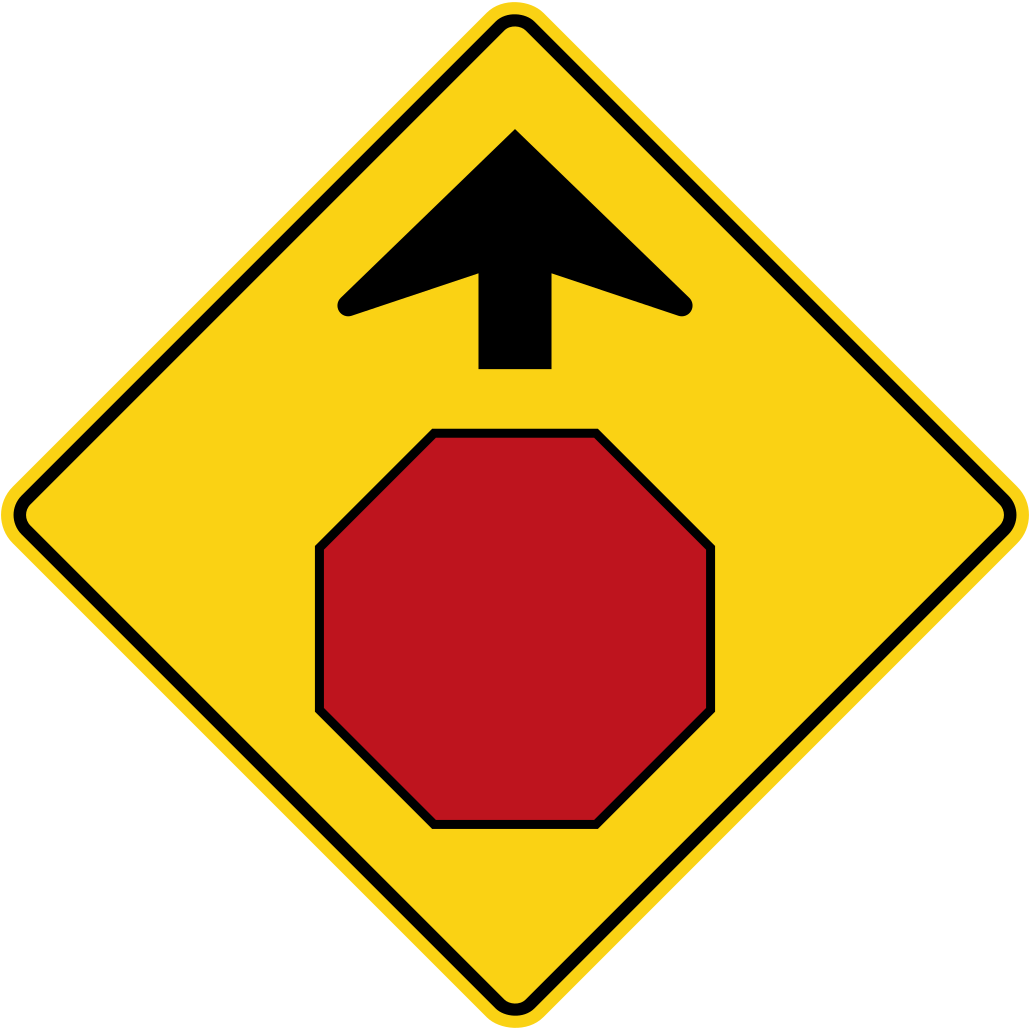
What should you do when you see this sign?
- A.Slow down and prepare to stop at the stop sign aheadAnswer
- B.Stop right where you are
- C.Yield only if another vehicle is coming
- D.Keep your speed, because the sign is only advice
Explanation: This warning sign means a stop sign is ahead: slow down and be ready to make a complete stop.
40 of 72 · Warning signs
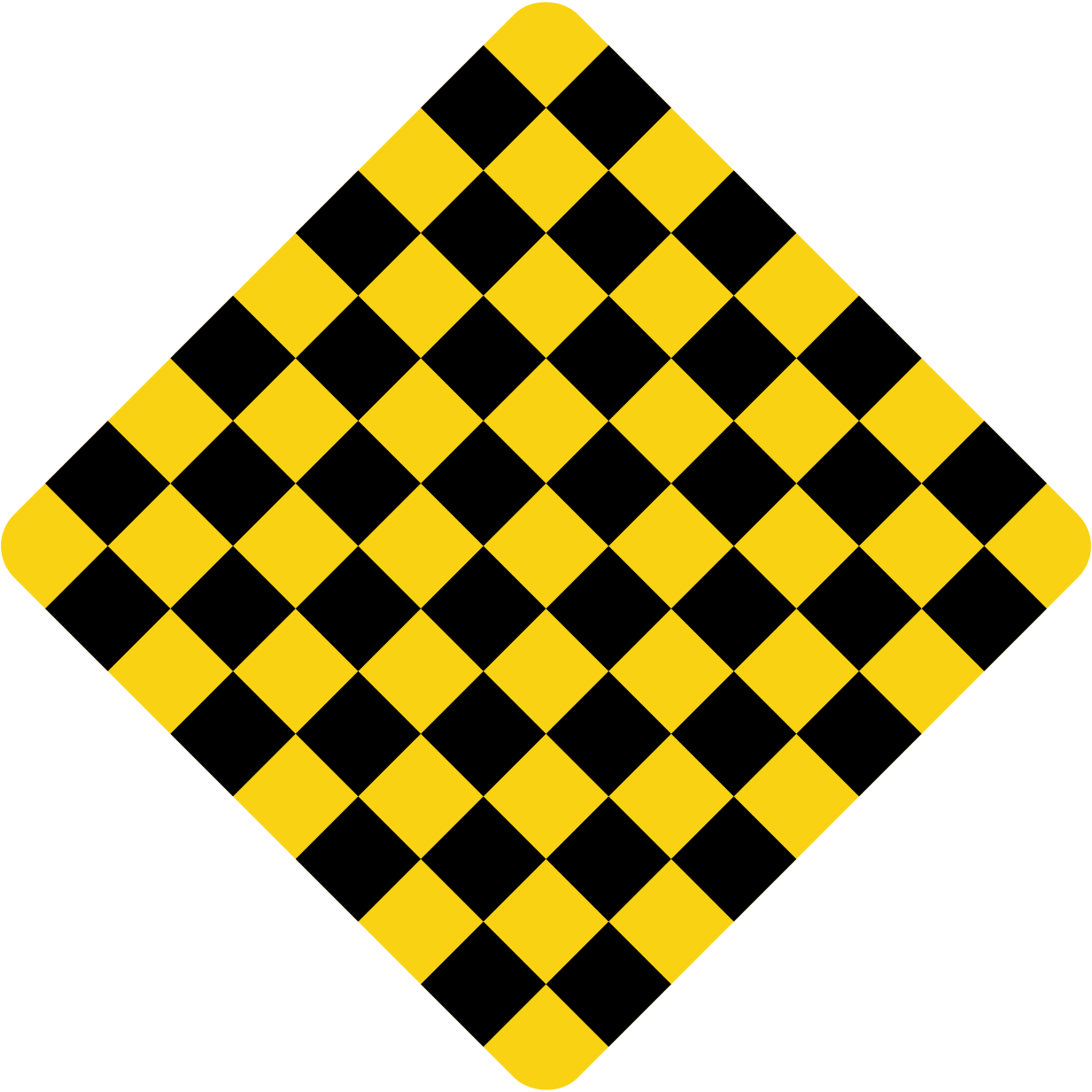
What does this yellow and black checkerboard sign mean?
- A.A construction detour starts here
- B.Traffic merges from both sides
- C.A rest area is a short distance ahead
- D.A sharp turn or bend in the road in the direction of the arrowAnswer
Explanation: The sign means a sharp turn or bend in the road in the direction of the arrow. The checkerboard border warns of danger: slow down and be careful.
41 of 72 · Warning signs

What do the downward-sloping lines on this hazard marker tell you?
- A.How many metres away the hazard is
- B.That the road ahead is closed
- C.The side on which you may safely passAnswer
- D.That you must stop before the hazard
Explanation: This marker warns of a hazard close to the edge of the road; the downward lines show the side on which you may safely pass.
42 of 72 · Warning signs
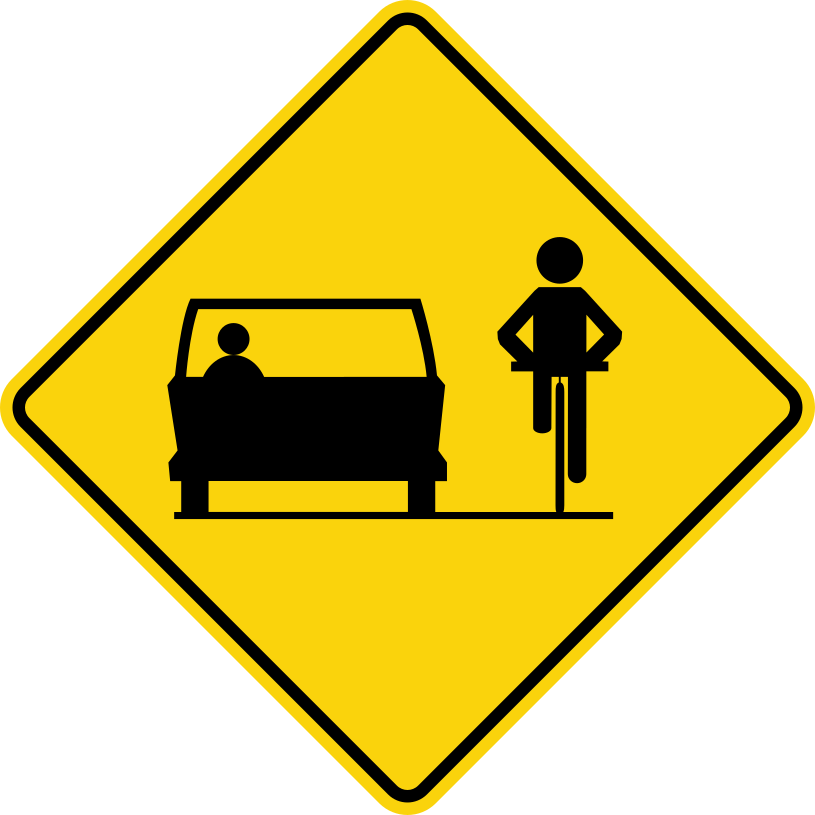
You see this sign and are about to pass a cyclist. How much space must you leave?
- A.At least one metreAnswer
- B.At least 30 centimetres
- C.At least three metres
- D.Enough room to pass without slowing down
Explanation: When passing a cyclist, drivers of motor vehicles must maintain a minimum distance of one metre where practical; whenever possible, change lanes to pass.
43 of 72 · Warning signs
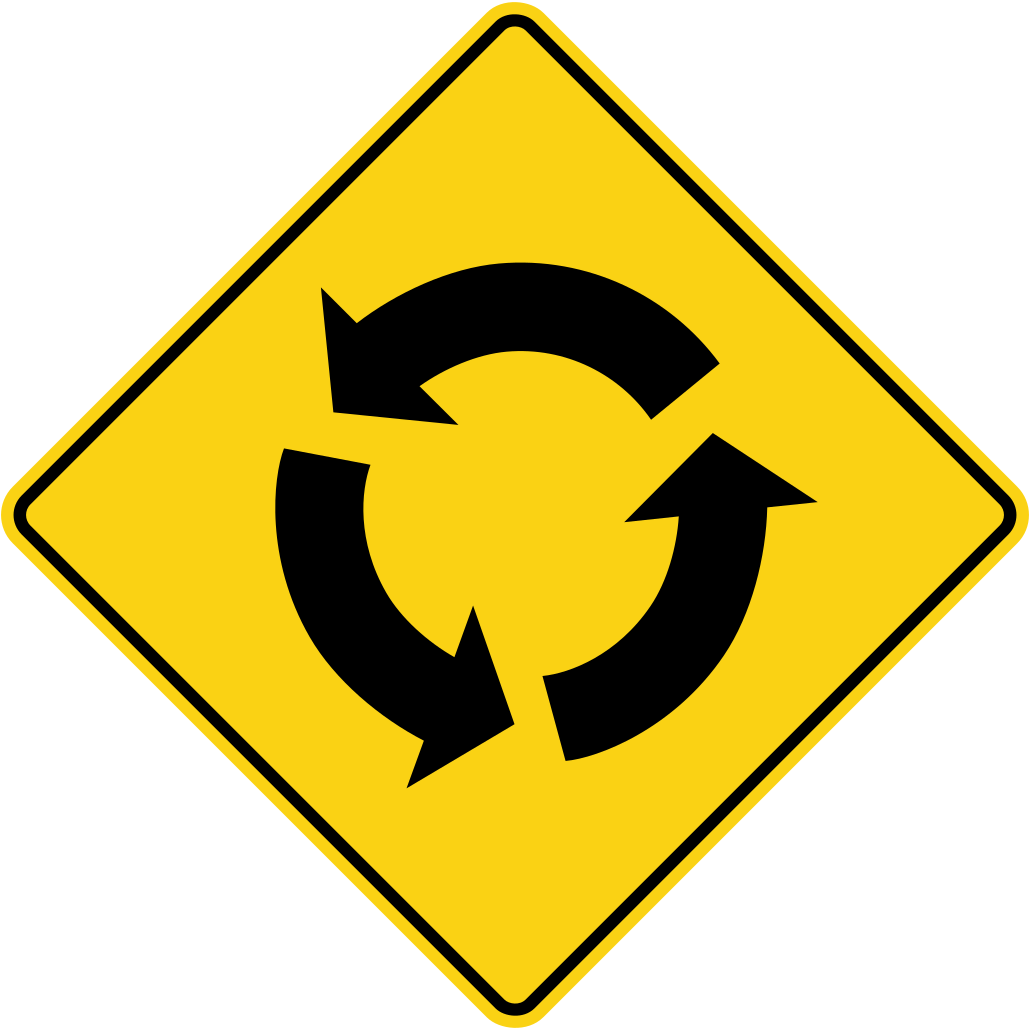
What must you do as you approach the feature shown on this sign?
- A.Stop completely before entering, every time
- B.Slow down and yield to traffic already going aroundAnswer
- C.Enter quickly and drive clockwise
- D.Signal left just before you leave it
Explanation: At a roundabout you yield to vehicles already circulating, which come from your left, travel counter-clockwise and signal right before your exit.
44 of 72 · Temporary condition signs
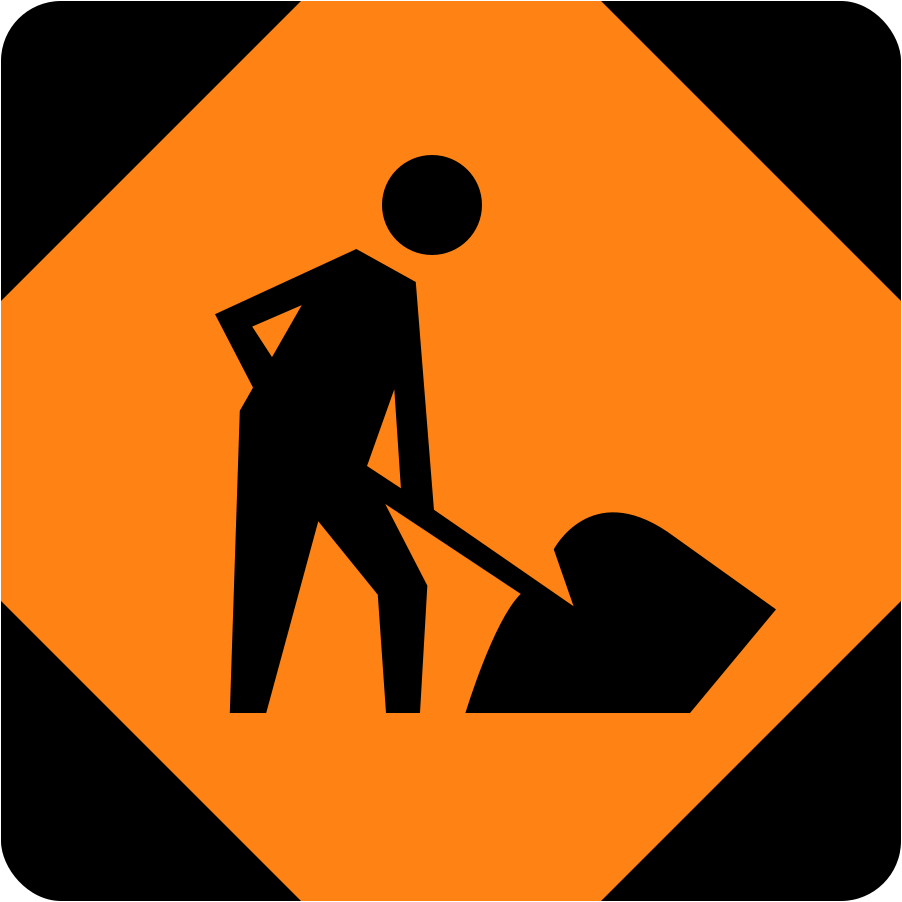
Orange signs with black symbols, such as this one, tell you about…
- A.the services available at the next exit
- B.a permanent change to the speed limit
- C.temporary conditions such as road work aheadAnswer
- D.a scenic route for tourists
Explanation: Temporary condition signs warn of unusual temporary conditions such as road work zones, diversions, detours, lane closures or traffic control people on the road. They are usually diamond-shaped with an orange background.
45 of 72 · Temporary condition signs
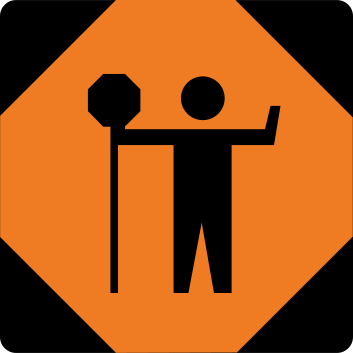
What must you do after you pass this sign?
- A.Speed up to clear the work area quickly
- B.Stop and wait until the sign is taken away
- C.Ignore hand signals and watch only the traffic lights
- D.Drive slowly and watch for instructions from the traffic control personAnswer
Explanation: This temporary condition sign means a traffic control person is ahead: drive slowly and watch for instructions.
46 of 72 · Temporary condition signs
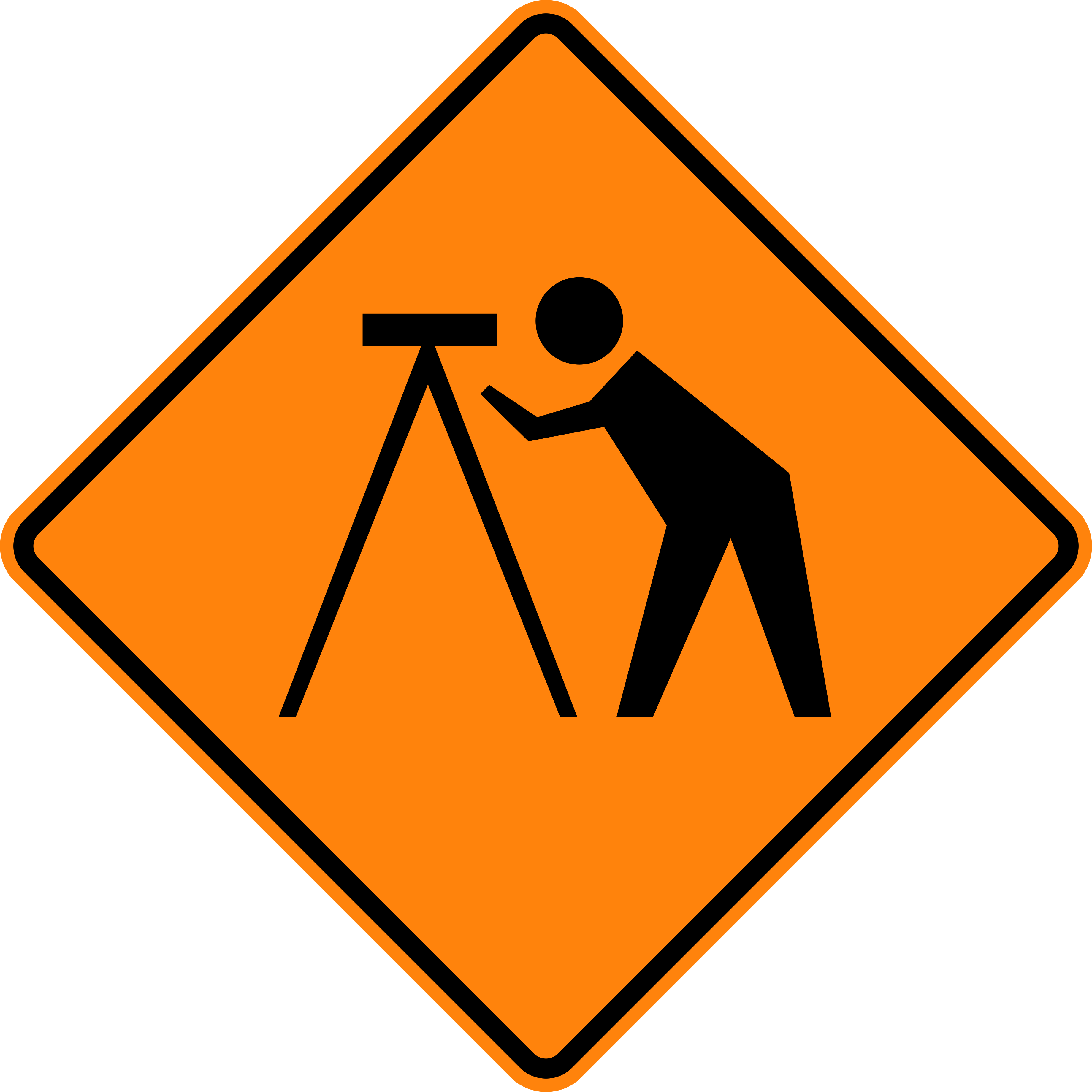
What does this orange sign mean?
- A.A tow truck is working on the shoulder
- B.A survey crew is working on the road aheadAnswer
- C.The road ahead is closed to all traffic
- D.A detour begins at the next corner
Explanation: This orange temporary condition sign means a survey crew is working on the road ahead.
47 of 72 · Temporary condition signs
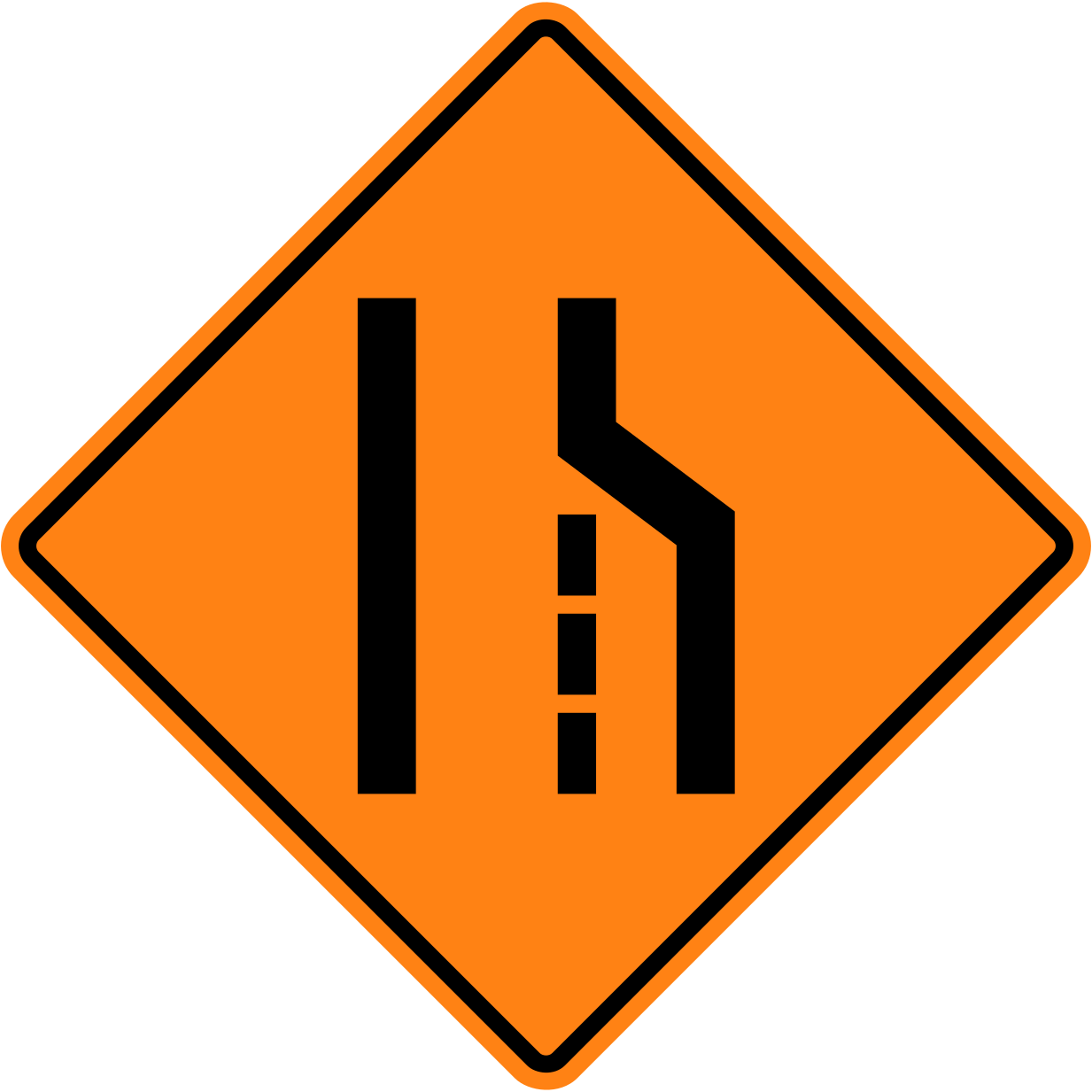
What should you do when you see this sign?
- A.Move into the lane that stays open as soon as it is safeAnswer
- B.Stop and wait for a worker to wave you through
- C.Use the shoulder to get past the closed section
- D.Stay in the closed lane until it is blocked off
Explanation: The lane ahead is closed for roadwork: obey the speed limit and merge with traffic in the open lane.
48 of 72 · Temporary condition signs
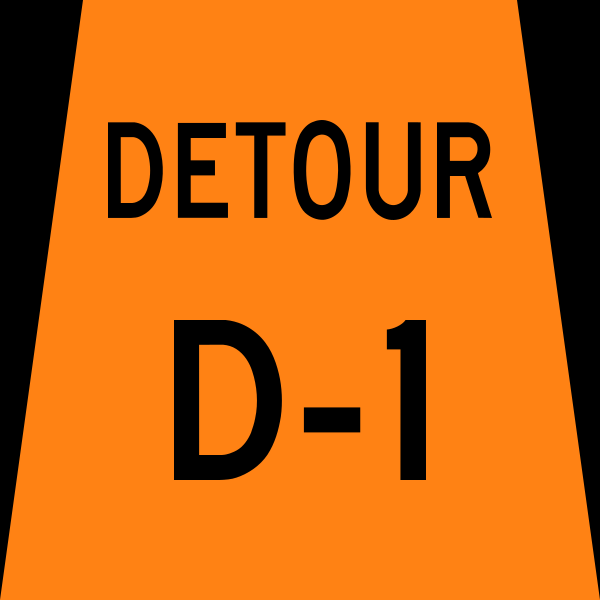
What does this sign tell drivers to do?
- A.Merge with traffic coming from the left
- B.Pull over so emergency vehicles can pass
- C.Take the exit that leads to services
- D.Follow the marked route around the closed roadAnswer
Explanation: A detour sign points to a temporary route around a closure; keep following the markers until they return you to your road.
49 of 72 · Information signs
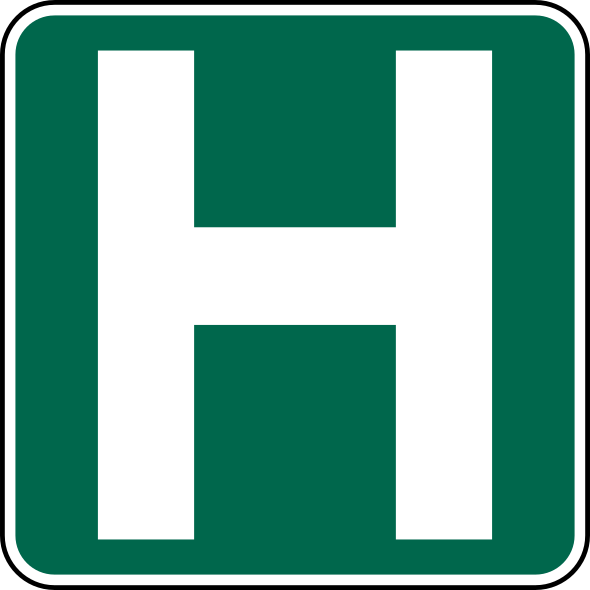
What does this information sign show you?
- A.A helicopter may land on the road ahead
- B.An off-road facility such as a hospitalAnswer
- C.A highway rest area is ahead
- D.A hotel is located at the next exit
Explanation: This kind of information sign shows off-road facilities such as hospitals, airports, universities or carpool lots.
50 of 72 · Information signs
What kind of information do green signs like this one give you?
- A.Directions, exits and distances to destinationsAnswer
- B.Warnings about hazards on the road ahead
- C.Rules you must obey, such as speed limits
- D.Places of interest for tourists
Explanation: Green signs guide you: this one shows which lane leads off the freeway, while others show distances in kilometres to towns ahead.
51 of 72 · Information signs
You catch up to a vehicle displaying this orange triangle. What does it tell you?
- A.The vehicle travels at 40 km/h or lessAnswer
- B.The vehicle is carrying dangerous goods
- C.The vehicle has broken down
- D.The vehicle is escorting a wide load
Explanation: The orange triangle with a red border alerts other drivers that the vehicle ahead will be travelling at 40 km/h or less. Watch for these slow moving vehicles and reduce your speed as necessary.
52 of 72 · Information signs
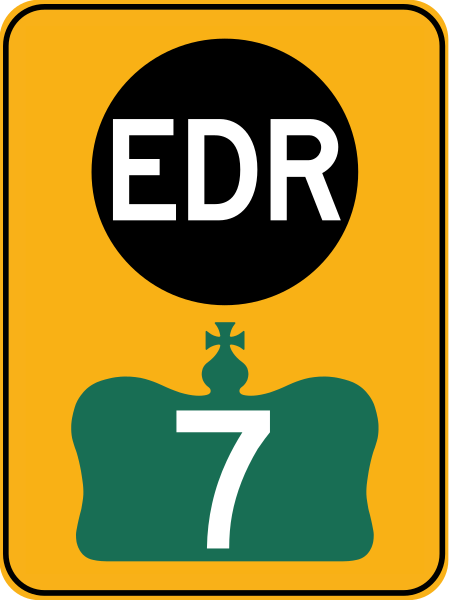
When do you follow the route marked with these emergency detour route signs?
- A.During rush hour, to avoid congestion
- B.When a provincial highway is closed unexpectedly and all traffic is detoured off itAnswer
- C.When you need fuel, food or a place to stay
- D.When you are towing a trailer
Explanation: EDR signs are used during the unscheduled closure of a provincial highway when the OPP detour all traffic off the highway. The markers are located along alternative routes and lead you around the closure and back onto the highway.
53 of 72 · Information signs
What does the number on a freeway interchange or exit tell you?
- A.How many exits there are before it
- B.The distance in kilometres from the beginning of the freewayAnswer
- C.The speed limit on the ramp
- D.The number of lanes the exit has
Explanation: Exit numbers are distances, not a count. Interchange 204 on Highway 401 sits 204 kilometres from Windsor, where that freeway begins — so the gap between two exit numbers is the distance in kilometres between them.
54 of 72 · Information signs
On an advance freeway sign, how are the lanes that lead off the freeway marked?
- A.Their arrows sit in a yellow box with the word “exit” under themAnswer
- B.Their arrows are shown in red
- C.They are left off the sign entirely
- D.They are marked with a number instead of an arrow
Explanation: The advance sign shows an arrow for each lane, and the ones that leave the freeway are boxed in yellow with “exit” written under them. Reading it early is the point: in an urban interchange more than one lane may peel off, and the sign is how you know which one you are in.
55 of 72 · Information signs
What does this green sign tell you?
- A.The distances in kilometres to towns and cities aheadAnswer
- B.The speed limit for the next stretch of road
- C.Which services are available at the next exit
- D.The route to the nearest hospital
Explanation: Green with white lettering is the colour for distances and destinations: this one gives the kilometres to the towns and cities on the road ahead. Facilities, services and attractions are signed in other colours.
56 of 72 · Information signs
You pass an information sign that is not green. What is it likely to be pointing you to?
- A.Facilities, services and attractionsAnswer
- B.A change in the speed limit
- C.A hazard on the road ahead
- D.A rule you must obey
Explanation: Green carries distances and destinations; the other colours in the information family guide you to facilities, services and attractions — fuel, food, lodging, a tourist site. None of them is an order, which is what separates information signs from regulatory ones.
57 of 72 · Information signs
You are approaching a roundabout and see a sign listing its exits. What is it for?
- A.It shows the upcoming exits and where each one takes youAnswer
- B.It tells you which exit has the right-of-way
- C.It sets the speed limit inside the roundabout
- D.It marks where you must stop before entering
Explanation: It is an information sign, not an instruction: it shows the upcoming roundabout exits and where they will take you. Read it before you enter — once you are going round, choosing a lane by reading signs is far harder.
58 of 72 · Temporary condition signs
An orange diamond sign shows a symbol with “1 km” under it. What does the distance mean?
- A.The construction work begins one kilometre aheadAnswer
- B.The work zone is one kilometre long
- C.You must slow down for one kilometre
- D.The detour adds one kilometre to your route
Explanation: The distance on an advance temporary sign is how far ahead the work starts, not how long it runs. It is there to give you room to change lanes and shed speed before you reach the zone.
59 of 72 · Temporary condition signs
A sign tells you that you are entering a construction zone. What should you be ready for?
- A.Extra caution, and a lower speed limitAnswer
- B.The same speed limit as the road before it
- C.A complete stop at the entrance to the zone
- D.A detour away from the road
Explanation: Drive with extra caution and be prepared for a lower posted limit. Worth remembering alongside it: speeding fines double in a designated construction zone when workers are present.
60 of 72 · Temporary condition signs
A large panel of flashing arrow lights is set up in the work zone ahead. What is it telling you?
- A.The direction you must followAnswer
- B.That the work zone has ended
- C.The number of lanes still open
- D.That a flagperson is directing traffic
Explanation: The flashing lights on the arrows show the direction to follow. An arrow board is placed where a lane is being taken out of service, and it is pointing at the lane you are expected to be in.
61 of 72 · Temporary condition signs
A sign warns that the pavement ahead has been milled or grooved. Why does that matter?
- A.Your stopping ability may be affected, and motorcycles lose tractionAnswer
- B.The surface is louder but no less safe
- C.The lane will be closed further on
- D.Only heavy trucks are affected
Explanation: Milled pavement is the ridged surface left after the old top layer is ground off. It can change how your vehicle stops, so obey the posted limit and drive with extra caution; motorcyclists in particular may find less grip than they expect.
62 of 72 · Temporary condition signs
A slow vehicle ahead of you in the work zone carries a sign on its back. What does it require?
- A.Do not pass it — it is a pilot or pace vehicleAnswer
- B.Pass it only on the left
- C.Keep at least two car lengths behind it
- D.Sound your horn before passing
Explanation: A pilot or pace vehicle leads traffic through a work zone at a controlled speed, often where one lane is shared by both directions. Passing it puts you in the part of the road it exists to keep you out of.
63 of 72 · Information signs
A green sign names a destination with the word “VIA” above a route number. What is VIA telling you?
- A.The roads you must follow to reach that destinationAnswer
- B.The distance to that destination
- C.An alternative route to use only when the highway is closed
- D.The name of the municipality maintaining the road
Explanation: VIA names the roads that must be followed to reach a destination. It answers “by which way”, not “how far” — the distance is the number beside the place name on a destination sign.
64 of 72 · Information signs
An overhead sign on the freeway changes its message while you watch. What kind of sign is it?
- A.A toll rate display
- B.One that reports current delays and lane closures aheadAnswer
- C.An advertising board, which you may ignore
- D.A speed limit sign that changes with the weather
Explanation: These signs change according to traffic conditions to give drivers current information on delays and lane closures ahead. What they show is as fresh as the traffic itself, so it is worth reading even when the road in front of you is still moving.
65 of 72 · Information signs
The truck ahead of you carries a placard on the back marking it as a long commercial vehicle (LCV). What should you expect?
- A.A truck that is about to make a wide right turn
- B.An oversize load with an escort vehicle behind it
- C.A double trailer up to 40 metres long, travelling at a limited speedAnswer
- D.A vehicle carrying dangerous goods
Explanation: An LCV is a double trailer that can be up to 40 metres in length. Recognising one from behind matters because of what passing it involves: far more road than a single trailer needs, against a vehicle that is also limited in speed. Plan the pass before you start it, or stay back.
66 of 72 · Information signs
You are driving in a designated bilingual area and the signs carry both English and French. What should you do?
- A.Read the English, which is the legally binding version
- B.Read both, since the two messages differ
- C.Treat a French-only sign as advisory rather than binding
- D.Read the message in whichever language you understand bestAnswer
Explanation: Read the message in the language you understand best. The two say the same thing, and they may share one sign or come one after the other — an English sign immediately followed by a French one.
67 of 72 · Information signs
Some information signs carry a row of numbers along the bottom edge. What is that numbering for?
- A.It helps emergency vehicles and drivers work out an appropriate routeAnswer
- B.It gives the year the sign was installed
- C.It is the phone number of the road authority
- D.It shows the posted speed limit in that section
Explanation: Emergency response numbering runs along the bottom of some information signs so that emergency vehicles — and the driver phoning them — can pin down where they are and work out a route to it. It is not part of the message the sign is otherwise giving you.
68 of 72 · Information signs
Interchange 204 on Highway 401 is 204 kilometres from Windsor, where the freeway begins. How do you work out the distance from one interchange to another?
- A.Read it off the distance sign; the numbers mean nothing by themselves
- B.Subtract one interchange number from the otherAnswer
- C.Count the interchanges in between and multiply by two
- D.You cannot — the numbers are assigned in order, not by distance
Explanation: Freeway interchange numbers are the distance in kilometres from the beginning of that freeway, so the gap between two of them is the distance between them: subtract one number from the other. It is the quickest way to know how far your exit still is, with nothing but the signs you are already passing.
69 of 72 · Information signs
A sign carries a wheelchair symbol. What is it telling you?
- A.A hospital is ahead
- B.Watch for pedestrians with disabilities crossing here
- C.The facilities it points to are accessible by wheelchairAnswer
- D.Only drivers with a disability permit may continue
Explanation: The wheelchair symbol on an information sign says the facilities it directs you to are accessible by wheelchair. Like the rest of the information family it describes what is there; it orders nothing, which is what keeps it out of the regulatory group.
70 of 72 · Temporary condition signs
A sign in a construction zone warns that fines for speeding are doubled. When does the doubling apply?
- A.At all times, from the first sign to the last
- B.Only between dusk and dawn
- C.Only if you are more than 20 km/h over the limit
- D.When workers are presentAnswer
Explanation: Fines for speeding in a designated construction zone are doubled when workers are present. The posted limit applies whether or not anyone is working, so an empty zone is not an invitation — it is the penalty that changes, not the rule.
71 of 72 · Temporary condition signs
An orange sign ahead tells you to reduce speed and be prepared to stop, but the traffic in front of you is still moving freely. What should you do?
- A.Slow down and be ready to stop — the sign warns of something you cannot see yetAnswer
- B.Keep your speed while traffic is moving, and slow only when you see why
- C.Stop where you are and wait to be waved through
- D.Change lanes to get past the work area sooner
Explanation: Temporary condition signs are posted for what is ahead, not for what you can already see: a lane that closes around the bend, a machine reversing onto the road, a queue that has not reached you yet. Reduce speed and be ready to stop when one says so. In a work zone, also avoid changing lanes and expect sudden stops.
72 of 72 · Temporary condition signs
A traffic-control person at a work zone holds up a SLOW sign, but the lane ahead looks clear to you. What does the law say?
- A.You must obey it — disobeying a STOP or SLOW sign held by a traffic-control person is an offenceAnswer
- B.It is advice only; the posted signs are what bind you
- C.You may proceed once you have judged the lane to be clear
- D.It applies only to trucks and construction vehicles
Explanation: It is an offence to disobey a STOP or SLOW sign displayed by a traffic-control person or a firefighter. They are directing traffic through a zone whose hazards you cannot see from the road — a reversing machine, a worker about to step out — so their sign outranks your own reading of the lane. Watch for them by day and by night.